


CRISPR-Cas9 is a big step forward in genetic engineering. It allows for precise changes to our DNA. But, it also brings big challenges that scientists need to tackle.
At times, CRISPR makes unintended gene edits in places it shouldn’t. These are called off-target effects. They are unwanted changes to our DNA.
These unwanted alterations are a big worry for research and treatments. They can cause problems that make treatments less safe and effective.
It’s key to understand these side effects to improve genetic medicine. Scientists are working hard to reduce risks. They want to make sure CRISPR’s benefits are fully realised.
The Fundamentals of CRISPR Gene Editing
CRISPR technology is a major breakthrough in biotechnology. It changes how we do genetic engineering. This tool lets us make precise changes to DNA with great accuracy and speed.
How CRISPR-Cas9 Functions in Genetic Modification
The CRISPR Cas9 mechanism uses a complex system to find and cut DNA. It starts with a guide molecule that matches the DNA target.
When it finds the right DNA sequence, the Cas9 enzyme cuts it exactly. This cut starts the cell’s repair process. Researchers can then make the changes they want.
Key Components: Guide RNA and Cas9 Enzyme
The CRISPR Cas9 mechanism relies on two main parts. The guide RNA (gRNA) finds the right spot in the DNA.
The Cas9 enzyme is like molecular scissors. It makes clean cuts in the DNA. Together, they allow for precise changes that were hard to make before.
Related Posts:
- What Is Machining Technology The Process of Shaping…

- How Does Cloud Technology Work Storing and Accessing…

- How Many Technology Companies Are in the World A…

- What Is Biorock Technology Mineral Accretion for…

- Is Technology in the Classroom Good or Bad Weighing…

- What Is Dri-FIT Technology Nike's Moisture-Wicking Fabric

Applications of CRISPR in Research and Therapy
CRISPR has many uses in science. In research, scientists use it to study genes by making specific changes in model organisms.
In medicine, CRISPR is being used to treat genetic diseases. It’s being explored to fix genes that cause sickle cell anaemia and cystic fibrosis.
CRISPR is also being looked at for cancer treatment. Scientists are working on using it to make immune cells fight cancer better. This could lead to new cancer treatments.
These uses show how CRISPR is changing biotechnology and medicine. It’s a powerful tool that keeps getting better, helping us tackle genetic problems.
Defining Off-Target Effects in CRISPR Technology
CRISPR gene editing is very precise but sometimes misses the mark. These mistakes are a big problem for scientists. Knowing what these errors are is key to improving research and treatments.
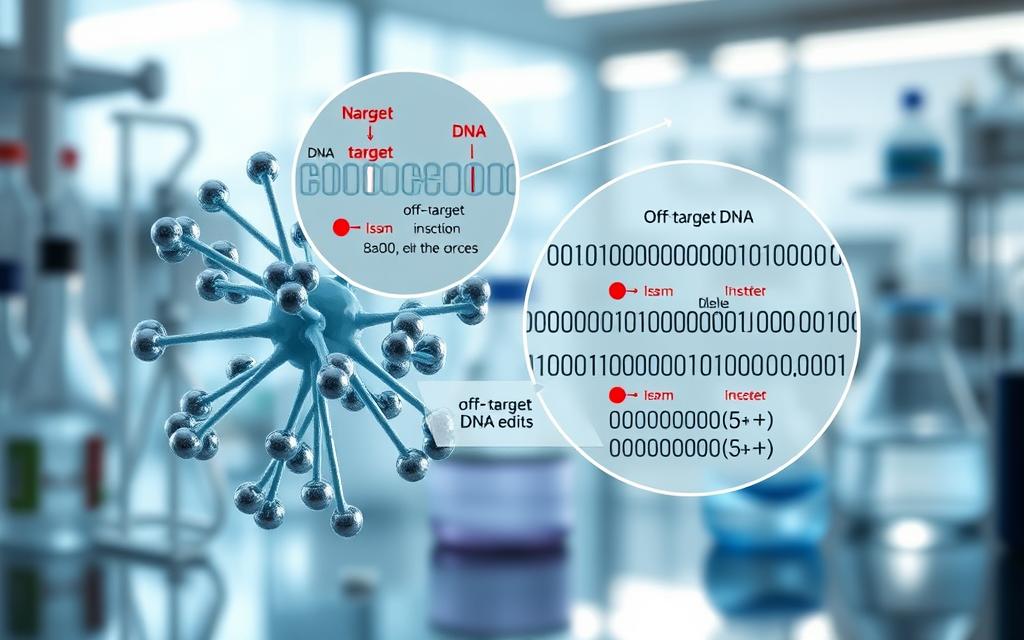
What Constitutes an Off-Target Edit?
An off-target effect happens when CRISPR-Cas goes to the wrong part of the genome. This usually happens because the wrong part looks similar to the right one. These mistakes can be small or big, affecting how cells work.
It’s important to tell apart random changes and true off-target edits. True off-target edits follow a pattern based on similarity in DNA sequences. This helps scientists predict and prevent these mistakes.
Types of Off-Target Effects: Single-Nucleotide Variants and Large Deletions
CRISPR off-target mutation types mainly include two kinds:
- Single-nucleotide variants (SNVs): These happen when base editing changes a single nucleotide. While precise, they can also cause single-base changes at the wrong places.
- Large deletions: These occur when the cell tries to fix a double-strand break but ends up deleting big chunks of DNA or adding random sequences.
The effects of these mutation types vary. Small changes might slightly alter protein function, while big deletions can stop gene expression. A recent study shows how these off-target effects affect different cell types.
Knowing about these types helps scientists find better ways to detect and prevent these mistakes. Each type needs its own approach to identify and measure during testing.
Mechanisms Behind Off-Target Effects
CRISPR is known for its precision, but it can sometimes make unexpected changes. To understand these mistakes, we need to look at design flaws and biological complexities.
Factors Influencing Off-Target Activity
Many things affect whether CRISPR-Cas9 edits the right spot or not. These include design choices and the cell’s environment.
Guide RNA Specificity and Design Flaws
The guide RNA is key for targeting Cas9. But, suboptimal GC content and similar sequences in the genome can lead to errors. These are common guide rna design flaws that raise the risk of off-target effects.
Studies show that Cas9 can accept some mismatches. For example, one study found:
“Mismatches in the target seed region closest to the PAM site can cause erroneous cleavage when tolerated by Cas9.”
This means even well-designed guides can sometimes bind to the wrong places in the genome.
The cell’s internal environment also affects where CRISPR edits DNA. Chromatin accessibility is key here. Open chromatin areas are easier for CRISPR to access, while tight chromatin is harder.
This is why some parts of the genome are more prone to off-target effects than others. Chromatin accessibility crispr research helps us understand this.
Epigenetic changes also play a role. They can make some DNA regions more or less accessible for editing at different times.
Biological Processes Leading to Unintended Edits
Cellular repair mechanisms also contribute to off-target effects. When Cas9 makes double-strand breaks, the cell’s repair systems might make mistakes.
There are two main repair pathways:
- Non-homologous end joining (error-prone)
- Homology-directed repair (more accurate)
The balance between these pathways can change depending on the cell type and condition. This affects whether off-target edits become permanent genetic changes.
This complex mix of molecular design, cellular environment, and repair processes creates many chances for off-target effects. Even with careful planning, these effects can happen.
Detecting and Measuring Off-Target Effects
Finding unintended genetic changes is a big challenge in CRISPR research. Scientists use lab tests and computer tools to find these hidden changes in the genome.
In Vitro and In Vivo Assessment Methods
There are two main ways to detect these changes. In vitro methods test DNA outside cells. In vivo methods test DNA inside cells to see how editing works in real life.
High-Throughput Sequencing Techniques
Digenome-seq detection is a top in vitro method. It uses Cas9 to break DNA, then sequences the whole genome. But, it needs a lot of sequencing and a reference genome to work well.
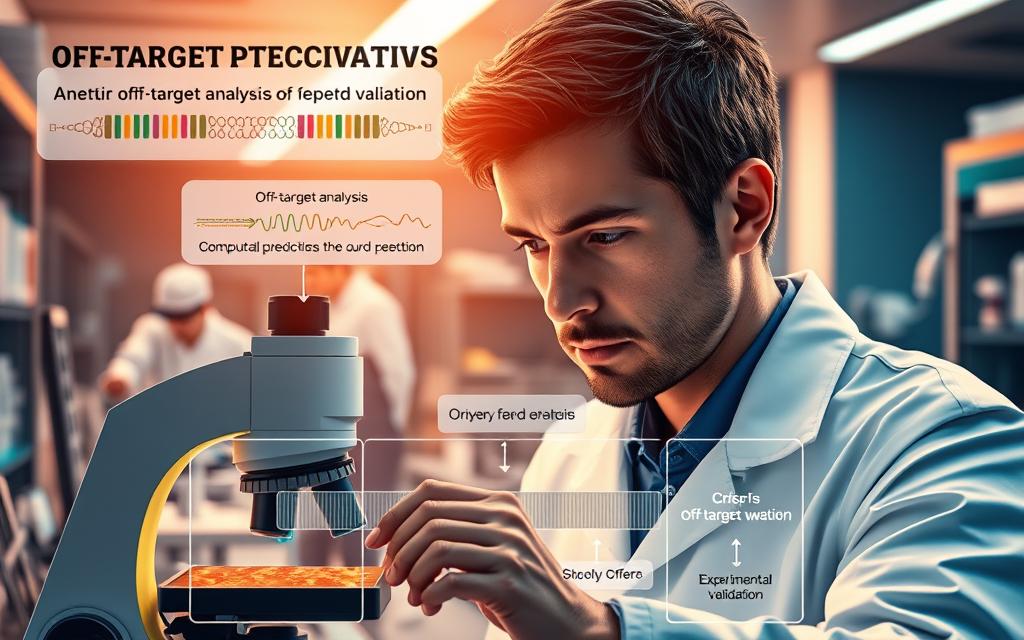
The guide-seq method (GUIDE-seq) is a strong in vivo method. It uses special DNA to find double-strand breaks. It’s very sensitive and has few false positives, and it’s cheaper than some other methods.
Computational Prediction Tools
Computers help by predicting where off-target sites might be. These tools look at guide RNA sequences against reference genomes. They find places with similar sequences that might get edited by mistake.
Challenges in Accurate Detection
Even with new tech, finding off-target sites is hard. Deep sequencing is very expensive. Some methods also don’t work well in all cell types.
Finding rare off-target sites is very hard. These rare changes might not be caught but could be dangerous. Current methods can’t find changes in less than 0.1% of cells without a lot of sequencing.
It’s also important to think about the biological context of these changes. As studies show, how accessible the DNA is and the state of the cell affect editing and detection. These factors make it hard to compare different experiments.
For more information, see relevant studies.
Implications of Off-Target Effects in Research
Off-target effects are more than just technical hurdles. They pose serious threats to the integrity of scientific research. These unintended changes can undermine the results of studies and slow down scientific progress.
Impact on Experimental Validity and Reproducibility
Off-target effects introduce hidden variables. Researchers might wrongly link these to their intended genetic changes. This confusion jeopardises the experimental validity crispr studies.
When Cas9 cuts untargeted parts of the genome, it can:
- Produce misleading changes in traits
- Lead to false positive results
- Hide the real effects of targeted gene edits
These problems add to the research reproducibility crisis facing science today. Labs find it hard to repeat results due to hidden off-target effects.
Case Studies: Notable Examples in Scientific Literature
Several key studies show how off-target effects have caused misunderstandings. In one cancer study, scientists thought they had suppressed tumours with their gene edit.
But, they later found the real effect came from an off-target edit in a tumour suppressor gene. This forced them to rethink their whole study.
Another study on stem cell differentiation had different results from different groups. The difference was due to different off-target effects from the same CRISPR tool.
These examples show why checking for off-target effects is vital. Using the right methods ensures results reflect real biological processes, not just editing mistakes.
Risks in Therapeutic Applications
CRISPR technology is a game-changer for treating genetic disorders. But, its use in therapy comes with big safety worries. The precision needed is huge when treating humans, as mistakes could change lives.
Potential Consequences in Gene Therapy Trials
CRISPR-based therapies in clinical trials face big challenges. Unintended genetic changes are more than just mistakes. They are real risks to patients’ health and treatment success.
These changes can mess with important biological processes. They can affect how genes work and how cells talk to each other. This could lead to bad reactions or unexpected changes in cells.
Oncogenic Risks and Immune Responses
One big worry is that CRISPR might turn on cancer genes or turn off genes that fight cancer. This could make cells more likely to become cancerous.
“Unprecedented mutations in the genome can disrupt gene regulatory and signal transduction networks, producing adverse immunogenicity or oncogenesis,” researchers note. This shows how oncogenic CRISPR edits could start cancer.

The immune system adds another layer of complexity. Off-target edits might create new proteins that the immune system sees as foreign. This could start an autoimmune reaction or make the body reject the treatment, harming both the treatment’s success and the patient’s safety.
Safety Concerns for Clinical Use
Gene therapy risks also raise ethical and regulatory questions. Germline editing is a big worry because changes could be passed on to future generations.
Regulators have to find a balance between allowing new treatments and keeping patients safe. They need to create rules that let promising treatments move forward but also ensure they are safe. This includes setting up systems to catch any unexpected effects in patients.
Using CRISPR in therapy needs careful attention. The benefits are huge, but we must face and solve these risks. Scientists are working hard to make CRISPR more precise and predict any possible problems before treatments are given to patients.
Strategies to Minimise Off-Target Effects
Researchers have found new ways to tackle CRISPR’s precision issues. They use advanced molecular engineering and experimental methods to make editing more accurate.
Improvements in CRISPR System Design
Science has led to the creation of better Cas proteins. These proteins are more precise, reducing errors in DNA editing.
High-Fidelity Cas Variants
New Cas9 variants have shown big improvements in precision. HypaCas9, eSpCas9(1.1), SpCas9HF1, and evoCas9 are at the forefront of this progress.
These improved enzymes cut down on off-target effects while keeping on-target efficiency high. They do this by needing more exact matches between guide RNA and DNA.
“These enzyme swaps will only reduce off targets where nicking/cleaving of DNA occurs.”
The table below compares key characteristics of prominent high-fidelity Cas9 variants:
| Variant | Specificity Improvement | On-Target Efficiency | Primary Application |
|---|---|---|---|
| HypaCas9 | 5-10 fold | 85-95% | Therapeutic research |
| eSpCas9(1.1) | 10-100 fold | 80-90% | Basic research |
| SpCas9HF1 | 4-5 fold | 75-85% | Cell line engineering |
| evoCas9 | 10-15 fold | 90-95% | Clinical applications |
Enhanced Guide RNA Algorithms
New tools predict off-target sites before starting experiments. These tools look at many factors to find the best guide RNA sequences.
Modern tools consider things like:
- Sequence homology across the genome
- Chromatin accessibility data
- Secondary structure formation
- GC content optimisation
This enhanced guide RNA design approach greatly reduces unintended editing before experiments start.
Experimental Approaches to Reduce Risks
Researchers also use smart experimental designs to lower risks. These methods add extra control and precision.
Key strategies include:
- Optimising delivery methods to control exposure duration
- Implementing dual nickase systems requiring two nearby cuts
- Modifying guide RNA chemistry to improve specificity
- Using truncated guide RNAs with reduced off-target risk
These methods, along with high-fidelity cas9 variants, create strong safety protocols. They help researchers make precise genetic changes while avoiding unwanted effects.
The ongoing improvement in molecular tools and experimental methods shows the scientific community’s dedication to CRISPR safety. This approach ensures that gene editing gets more precise over time.
Ethical Considerations in CRISPR Editing
CRISPR technology is changing the game, but it raises big ethical questions. Editing cells in our bodies is one thing, but changing genes that can be passed on is another. This could lead to permanent changes in our genes.
Balancing Innovation with Safety
Genetic engineering is moving fast. Scientists must keep pushing forward while making sure they’re doing it right. This is even more important when we talk about changes that can be passed on to future generations.
Germline editing raises big ethical questions. Unlike changes made in our bodies, these can affect our kids and grandkids. They could lead to health problems or change our genes forever.
Scientists know they can’t always get it right. This makes them think hard about how to keep things safe and controlled.
Public Perception and Ethical Debates
People have different views on CRISPR. The media often shows both the good and the bad sides of genetic editing.
The genetic editing controversy covers many areas:
- Who should decide on changes that affect future generations?
- Will some people get to choose enhancements while others can’t?
- Could genetic changes harm the environment?
Rules and guidelines are being made as we go along. Many places have put a hold on making permanent changes to genes. But they’re letting research keep going, with careful checks.
This careful approach shows how serious these changes are. Experts, ethicists, and lawmakers are all working together. They aim to make sure CRISPR is used for good.
As we get better at spotting and fixing problems, these debates will keep shaping how we use CRISPR. Talking about crispr ethics is key to making sure this technology helps us all.
Regulatory Landscape for CRISPR Technologies
The rules for CRISPR-based treatments are changing as we learn more about their side effects. Health bodies worldwide agree that strict rules are needed. This is to keep treatments safe while allowing new discoveries.
Current Guidelines in the United States
The Food and Drug Administration has strict rules for CRISPR treatments. They ask for detailed data on how precise and safe these treatments are. This is before they can be tested on people.
When checking for side effects, the FDA looks at different methods. This way, they can be sure the treatments are safe before they start human trials.

The FDA’s rules are getting better as technology and experience grow. They now want longer studies to catch any late side effects.
International Perspectives on Oversight
In Europe, the EMA is also careful with international gene editing policies. They need a lot of information about side effects and a good balance of risks and benefits before they let trials start.
Asian countries have different ways of handling CRISPR rules. Some are quicker to approve new treatments, while others are more cautious, like Western countries.
There’s a push for global rules as scientists share how to spot side effects. Workshops and research together aim to make safety standards the same everywhere.
The mix of new science and careful rules helps CRISPR treatments move forward safely. This balance supports both new discoveries and keeping patients safe.
Future Directions in Off-Target Research
CRISPR technology is changing fast, with a focus on being more precise and safe. New ways to find off-target sites are helping to make better editing tools. This is exciting for the future of genetic editing.
Emerging Technologies for Safer Editing
Scientists are working on new methods to avoid unwanted genetic changes. Prime editing technology is a big step forward. It makes precise edits without harming the DNA structure.
Base editing advances are also promising. They can change one DNA letter at a time. This reduces the risk of big DNA mistakes seen with traditional CRISPR.
Researchers are also looking into:
- High-fidelity Cas variants with improved targeting accuracy
- RNA-based editing systems that offer temporary modifications
- Epigenetic editors that modify gene expression without altering DNA sequence
Long-Term Goals for Precision Gene Editing
The main goal is to make editing systems almost perfect. Future research will use new algorithms with epigenetic and chromatin data. This will help predict off-target effects better.
Creating standard tests for off-target risks is also key. The scientific community needs reliable ways to check these risks. This will help compare different CRISPR systems safely.
Eventually, we want editing systems that can tell apart very similar DNA sequences. This would be great for fixing genetic diseases without harming healthy genes. Such precision could lead to safe and effective treatments.
Conclusion
CRISPR gene editing faces a big challenge: off-target effects. These can mess up research and make treatments unsafe. We need to understand how they work and find better ways to spot them.
New designs in CRISPR, like better Cas9 variants, are making it more precise. These changes help make gene editing safer for use in medicine.
The future of CRISPR depends on careful checks and ethical thinking. We must keep pushing forward but also be cautious. This balance is key to using this powerful tech wisely.
CRISPR is on the path to helping with genetic diseases and pushing science forward. We’re working hard to make gene editing perfect. Our efforts and attention are needed to get there.
FAQ
What are off-target effects in CRISPR technology?
Off-target effects are unwanted changes in the genome. They happen when CRISPR-Cas9 acts on the wrong DNA spots. This can lead to single-nucleotide variants or bigger changes, making it hard for research and treatments.
How does the CRISPR-Cas9 system work?
The CRISPR-Cas9 system uses a guide RNA to find the right DNA spot. The Cas9 enzyme then cuts the DNA. This allows for precise changes to the genome.
What types of off-target effects can occur?
Off-target effects can be small changes in DNA or bigger changes. These can mess up how genes work, affecting the body in different ways.
What factors contribute to off-target activity?
Off-target activity can come from guide RNA not matching DNA perfectly. It can also be due to poor guide RNA design or the cell’s environment.
How are off-target effects detected?
Scientists use several methods to find off-target effects. These include in vitro and in vivo techniques, as well as sequencing and computer tools. But, finding these effects can be hard.
What impact do off-target effects have on research?
Off-target effects can ruin research by adding confusion. They can make results hard to trust and hard to repeat. This has happened in many studies.
What risks do off-target effects pose in therapy?
In treatments, off-target effects can be very dangerous. They can turn on cancer genes or cause immune reactions. This is a big worry, even more so in gene editing that can pass on changes.
How can off-target effects be minimised?
To reduce off-target effects, scientists use better Cas variants and guide RNA designs. They also try new ways to deliver the CRISPR system. These steps aim to make changes more precise.
What are the ethical considerations around off-target effects?
Ethical debates focus on the risks of making permanent changes to the genome. People worry about germline editing, where changes can be passed on. This raises big questions about safety and morality.
How are CRISPR technologies regulated regarding off-target effects?
Places like the FDA in the US need detailed checks for off-target effects before treatments can be used. Other countries have their own rules. These rules are getting stricter as we learn more.
What future developments aim to address off-target effects?
New technologies like prime editing and base editing might be safer. They aim to make fewer mistakes. The goal is to make treatments safer and more precise.
