

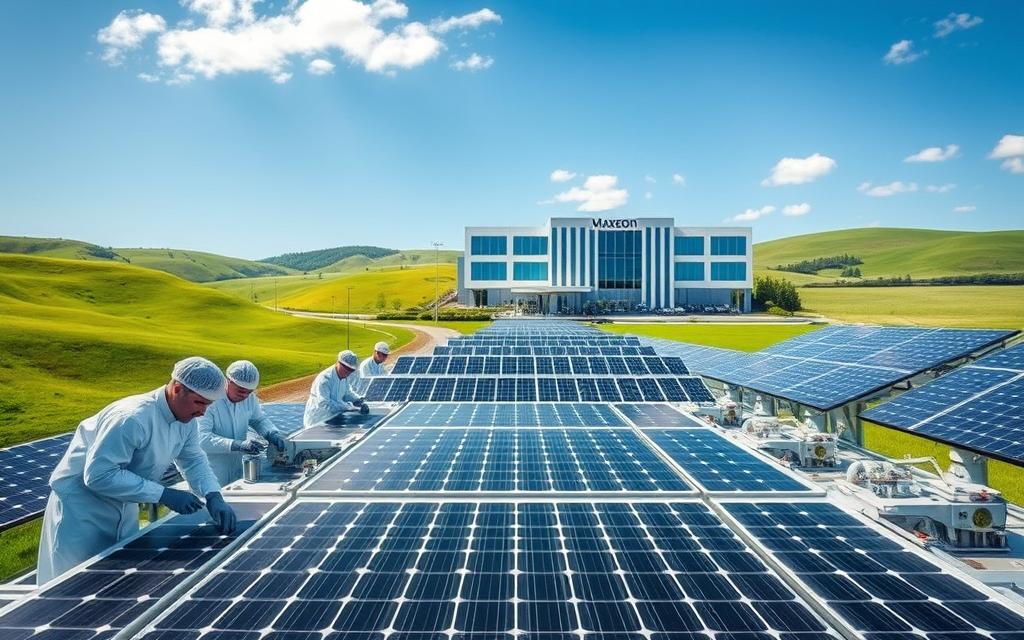
The renewable energy sector saw a big change on 27 August 2020. SunPower Corporation split into two separate companies. This move was to focus on different markets.
This split was a big moment for both companies. Maxeon Solar became a standalone global solar panel maker. SunPower focused on solar services in North America.
This change helped both companies grow in their own ways. They could focus on what they do best in their markets.
This change has made the solar industry more competitive. Now, each company has its own unique offer for investors and others in the field.
The Origins of Maxeon Solar Technologies
Maxeon Solar Technologies started as part of SunPower Corporation. It was built on years of solar innovation. This journey laid the groundwork for a major player in solar panel manufacturing.
SunPower’s Corporate History and Solar Innovations
SunPower began in 1985 by Dr. Richard Swanson, a Stanford professor. He aimed to make solar energy more efficient with photovoltaic technology.
Founding and Early Technological Advancements
SunPower quickly made a name with its research. They created the first commercially available silicon solar cells with 20% efficiency. This set a new standard in the industry.
Thanks to these innovations, SunPower became a leader in high-performance solar solutions. These advancements were the foundation of Maxeon Solar Technologies.
Related Posts:
- How Many Technology Companies Are in the World A…

- How Does Cloud Technology Work Storing and Accessing…
- What Is Biorock Technology Mineral Accretion for…

- What Are Off-Target Effects in CRISPR Technology…

- What Is the Forbes Technology Council An Elite…

- Does Georgia Institute of Technology Require the SAT…

Strategic Rationale for the Spin-Off Decision
In November 2019, SunPower’s leaders decided on corporate restructuring. The solar market had split into residential, commercial, and large-scale manufacturing.
This split allowed each company to focus on its area. SunPower could work on solar solutions, while Maxeon could improve manufacturing and grow production.
“This separation will create two focused, market-leading companies with distinct growth strategies”
Market Pressures and Shareholder Value Considerations
Global solar manufacturing competition was intense. Chinese companies had cut costs, forcing Western companies to adapt.
Shareholders wanted clear value from SunPower’s different businesses. The spin-off gave investors a choice between manufacturing or technology.
This move was a big energy sector spin-off of the decade. It helped both companies tackle their specific challenges and opportunities better.
The Spin-Off Event: Execution and Immediate Aftermath
The split of Maxeon Solar Technologies from SunPower was a detailed plan. It took several months to set up. The goal was to create two separate companies that could trade on the stock market.
Announcement and Timeline of the Separation
In November 2019, SunPower’s board decided to split off Maxeon Solar Technologies. This was the start of a nine-month journey to complete the separation.
The companies had to get through a tough regulatory approval process in many places. They had to follow different laws and rules in each area.
- 17 August 2020: Record date set for shareholder distribution
- 24 August 2020: Got final approvals everywhere
- 27 August 2020: Spin-off finished and trading started
These dates showed the hard work done by both companies and the regulators.
Distribution of Assets and Shareholder Impact
The asset allocation plan split SunPower’s work in a smart way. Shareholders got one Maxeon share for every eight SunPower shares. This gave them value right away.
This move let investors see Maxeon’s global solar panel making. They could keep their SunPower shares for the North American market.
Allocation of Intellectual Property and Manufacturing Facilities
The split of physical and intellectual property was smart. SunPower kept its Oregon factory and North American focus. This helped it stay strong in that area.
Maxeon got international factories in France, Malaysia, Mexico, and the Philippines. It also got over 900 patents and lots of research skills. This made Maxeon a leader in solar technology worldwide.
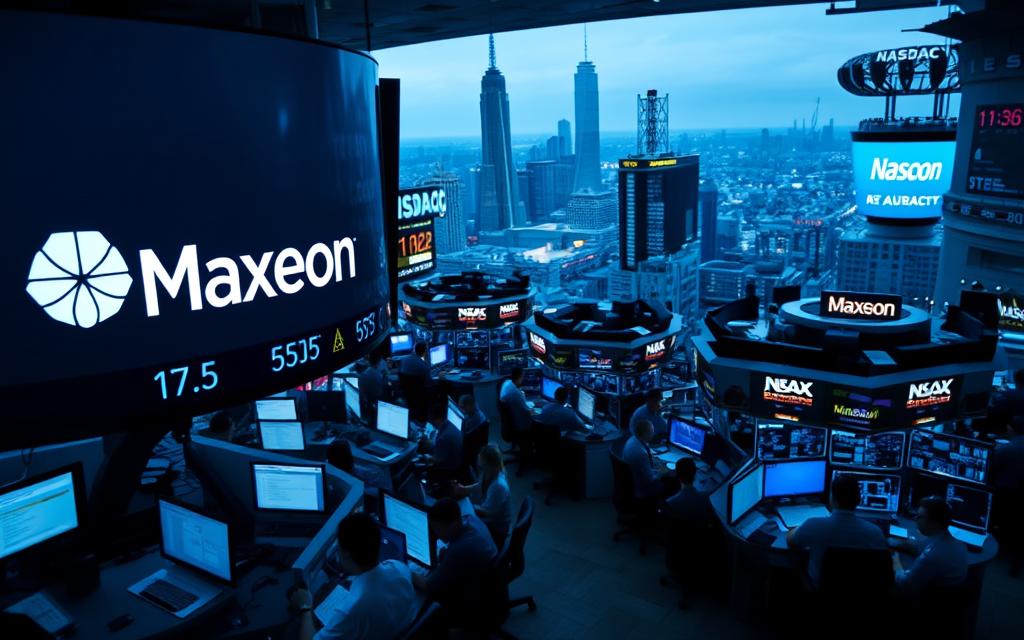
The NASDAQ listing on 27 August 2020 made Maxeon a public company. This was a big step for both companies.
What Happened to Maxeon Solar Technologies Post-Spin-Off
After splitting from SunPower, Maxeon Solar Technologies started its own journey. It faced new challenges and found opportunities. The company’s early months showed both ups and downs that shaped its future.
Initial Market Performance and Investor Reception
Maxeon began trading on NASDAQ on 27 August 2020. This was a key moment for the new company. The MAXN stock performance showed both hope and caution from investors.
Analysts watched Maxeon closely in its first weeks. The stock price changed a lot as it settled. This was because investors were unsure about Maxeon’s future as a solo solar maker.
The investor confidence in Maxeon grew with a $298 million investment from Tianjin Zhonghuan Semiconductor. This big investment showed strong belief in Maxeon’s tech and market position.
Stock Listing and Early Trading Volatility
Maxeon’s listing on NASDAQ caught a lot of attention in the renewable energy world. The stock’s early moves showed typical signs of a new company finding its value.
In the first month, the stock’s volume and price changes showed both excitement and uncertainty. This period was key for setting Maxeon’s market value.
Leadership and Operational Changes
Maxeon made big changes to stand on its own. It moved its global headquarters to Singapore, aiming for a strong Asian presence.
This move was more than just a change of address. It showed Maxeon’s commitment to being a global solar tech company with better access to growth markets.
The leadership transition was key in shaping Maxeon’s early path. New leaders brought fresh ideas and skills to tackle the challenges of being an independent solar company.
Appointment of New CEO and Management Team
Jeff Waters became CEO, marking a big step for Maxeon. Waters had a lot of experience in tech manufacturing and global operations, making him a great fit.
Under Waters, Maxeon built a team with skills in solar tech, manufacturing, and international business. This team was vital for Maxeon’s independence from SunPower.
The new team focused on using Maxeon’s tech strengths while finding new strategies for being independent. This approach helped Maxeon keep its momentum while exploring new opportunities.
| Post-Spin-Off Milestone | Date | Significance | Impact on Operations |
|---|---|---|---|
| NASDAQ Listing (MAXN) | 27 August 2020 | Independent market presence | Direct investor access and valuation |
| TZS Investment Completion | August 2020 | $298 million capital infusion | Enhanced manufacturing capabilities |
| Singapore Headquarters Establishment | Q3 2020 | Strategic Asian positioning | Improved market access and logistics |
| New CEO Appointment | August 2020 | Leadership transition completion | Fresh strategic direction implementation |
These changes laid the groundwork for Maxeon’s post-spin-off performance. With new leadership, a strategic location, and a big investment, Maxeon was ready to grow in the solar market.
Maxeon’s Growth Strategies in the Global Solar Market
After splitting from SunPower, Maxeon Solar Technologies set out to be a top player in solar. They focused on two main areas: growing their manufacturing worldwide and improving solar technology.
Expansion of Manufacturing Capabilities
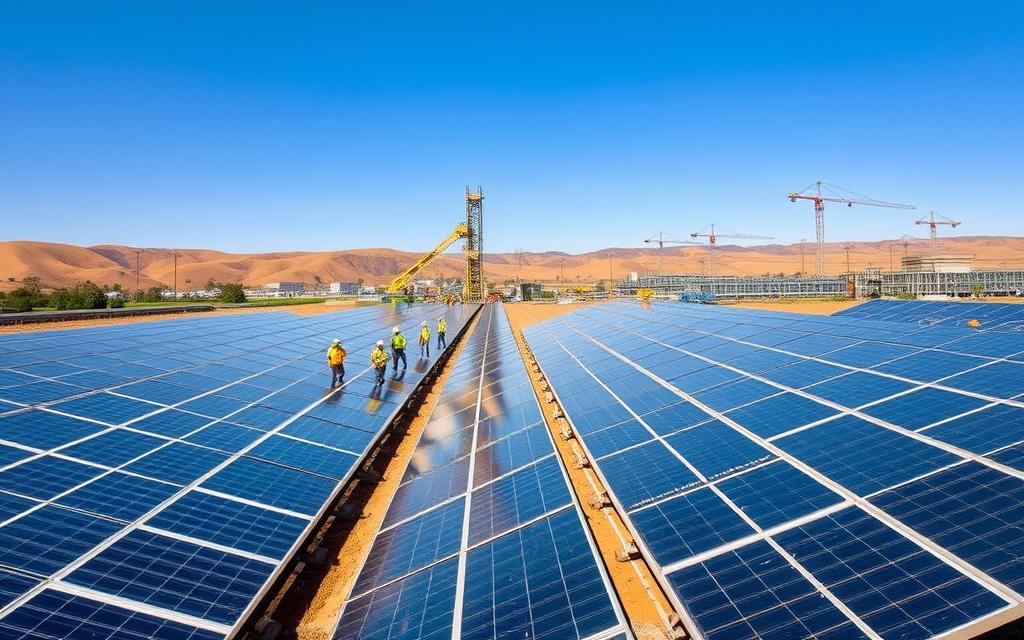
Maxeon’s big plan to grow its solar manufacturing got a boost from a $298 million investment. This money helped them increase their production capacity for new solar products globally.
This investment helped upgrade old lines and start new ones in key places. It made Maxeon better at serving markets worldwide and cut costs by making more efficiently.
New Facilities and Production Scaling
Maxeon worked hard to make more while keeping quality high. The TZS investment aimed to boost production of their latest solar panels. This helped meet growing demand better.
This move made Maxeon stronger in both home and business solar markets. They could offer more of their top-quality solar products.
Product Innovation and Technology Development
Maxeon kept pushing the limits of technology development as part of their growth plan. They used over 900 patents from SunPower to keep innovating.
They worked with SunPower’s R&D team for early research. But they focused on making new tech ready for market. This way, they could bring new products to customers quickly.
Advances in Solar Panel Efficiency and Durability
Maxeon’s team made big leaps in panel efficiency with new designs and processes. These improvements meant panels could turn more sunlight into electricity without taking up more space.
They also made panels last longer in tough weather. This meant customers got more value from their solar systems over time.
Maxeon aimed to make solar solutions that work better and fit well with today’s energy systems. Their focus on both performance and integration helped them stand out in the global solar market.
Financial Performance and Market Position
Maxeon Solar Technologies became independent in August 2020. It has shown great skill in the solar industry’s financial world. The company’s journey as a separate entity offers insights into its strengths and challenges.
Revenue Trends and Profitability Analysis
Maxeon has grown its revenue while keeping a careful eye on costs. In the early months after spinning off, it saw good growth, mainly in international markets. Their high-quality solar panels were popular there.
Looking at profits, Maxeon has faced some challenges. Making more panels at scale helped cut costs, but spending on research and development affected profits. The company focuses on creating value over time, not just making quick profits.
Quarterly Earnings Reports and Key Metrics
Quarterly reports show Maxeon’s strong points:
- It does well in residential and commercial markets
- It’s growing in emerging markets
- It’s getting better at making panels more efficiently
- It spends 4-6% of its revenue on research and development
These numbers show Maxeon’s dedication to innovation and doing things right in the solar world.
Competitive Landscape and Market Share
The solar market is very competitive. Maxeon stands out by focusing on technology, not just price.
Maxeon’s market share varies by region. It leads in premium residential markets but needs to grow in utility-scale projects.
Comparison with First Solar and Other Rivals
First Solar is an interesting rival to compare with. Both companies aim for innovation, but they go about it differently.
| Metric | Maxeon Solar Technologies | First Solar | Jinko Solar |
|---|---|---|---|
| Technology Focus | Premium rooftop solutions | Utility-scale thin film | Mass market panels |
| Manufacturing Footprint | Global distributed | US-centric | China-dominated |
| R&D Investment | 6% of revenue | 4% of revenue | 3% of revenue |
This comparison shows Maxeon’s focus on technology. It aims to offer unique value in certain markets with its high-efficiency panels.
Maxeon’s success depends on keeping its unique position as it grows. This is key in the competitive solar market.
Challenges and Setbacks Faced by Maxeon
Maxeon Solar Technologies faced big challenges after becoming independent. These challenges tested its strength in the global solar market. The company had to adapt and manage resources wisely to overcome obstacles.
Supply Chain Disruptions and Material Shortages
Maxeon struggled with solar supply chain issues. These issues affected its ability to make products and meet delivery times. Shortages of materials like polysilicon and solar glass caused big problems.
The company’s factories faced interruptions because of these problems. Maxeon tried to solve these issues by:
- Finding new suppliers in different places
- Keeping more stock of important materials
- Finding other ways to get key parts
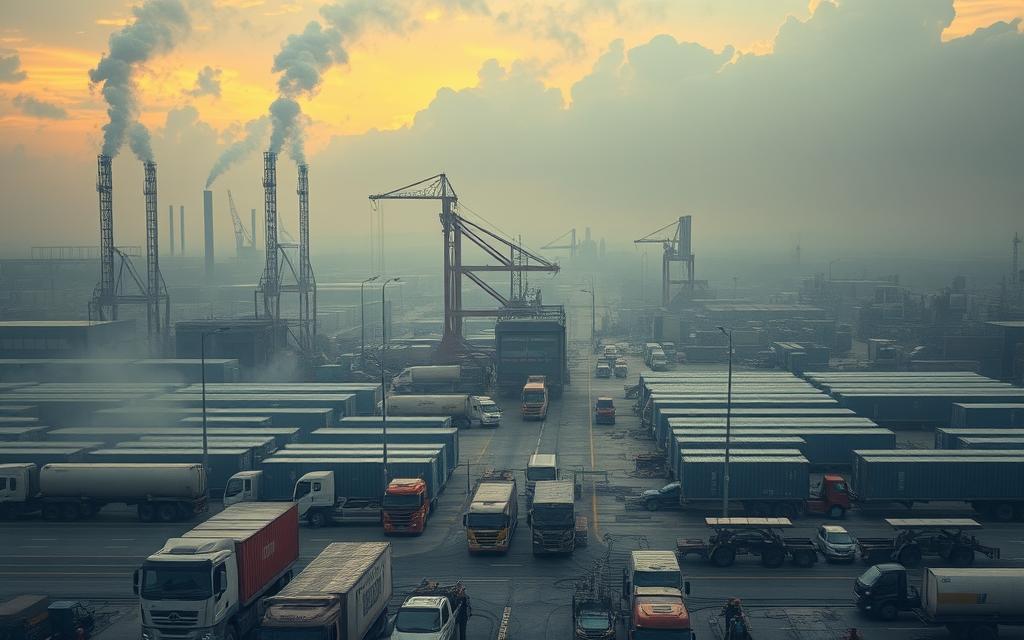
The COVID-19 pandemic made trade policies even harder. Shutdowns and travel limits messed up Maxeon’s plans to make and deliver products.
Trade issues forced Maxeon to keep changing its supply chain plans. This made things more expensive and delayed deliveries for customers worldwide.
Regulatory Hurdles and Geographic Barriers
Maxeon faced different regulatory challenges in each place it operated. The company had to follow many rules and standards, which were often different.
These rules made things harder and sometimes delayed when Maxeon could sell new products. Maxeon set up special teams to deal with these rules quickly.
Tariffs and Import Restrictions in Key Markets
Import tariffs were a big problem in important markets like the US and Europe. Duties and other trade measures made Maxeon’s prices higher in these places.
To deal with this, Maxeon changed how it made products and looked into making them locally. These moves helped reduce the cost of trade barriers and kept Maxeon in the market.
Strategic Partnerships and Collaborations
Maxeon’s growth strategy after becoming independent focused on strong partnerships. It used over 1,100 authorised sales and installation partners worldwide. This helped expand its market and improve technology.
These partnerships also kept important ties with SunPower, its former parent. This allowed Maxeon to grow quickly and maintain key relationships.
Alliances with Utilities and Large-Scale Projects
Maxeon aimed to be a leader in commercial solar by teaming up with utilities. These partnerships were for big solar projects needing the latest tech and reliable performance. Maxeon’s panels were a top choice for utilities aiming to hit renewable energy goals.
These partnerships gave Maxeon steady income and boosted its reputation. Its panels’ consistent performance won over project developers.
Notable Deals with North American and European Entities
In the US, Maxeon made big deals with major utilities for huge solar farms. They used the latest panel tech.
In Europe, Maxeon grew through partnerships with energy developers in Spain, France, and Germany. These deals included long-term supply agreements, ensuring steady income and stability.
Research Initiatives with Academic Institutions
Maxeon teamed up with top universities to improve solar tech. These partnerships aimed to boost cell efficiency, durability, and manufacturing. They also helped train future solar engineers.
Maxeon worked closely with universities in materials science and renewable energy. These partnerships led to new technologies, making Maxeon more competitive.
Joint Ventures for Next-Generation Solar Technologies
Maxeon’s biggest collaborations were for new solar tech. It kept working with SunPower’s Silicon Valley R&D group for early research. But it handled innovation for deployment itself.
This setup kept tech synergies alive despite the split. Maxeon focused on scaling new tech, while SunPower explored basic research. This created a smooth innovation flow.
| Partner Type | Region | Project Focus | Technology Contribution |
|---|---|---|---|
| Utility Companies | North America | Large-Scale Solar Farms | High-Efficiency Panels |
| Energy Developers | Europe | Commercial Installations | Durability Solutions |
| Academic Institutions | Global | Research & Development | Efficiency Innovations |
| Technology Partners | Silicon Valley | Next-Generation Cells | Advanced Materials |
Maxeon’s partnerships opened up new growth paths beyond just sales. Its team-up approach set it apart in markets where tech and reliability mattered most.
Future Outlook for Maxeon Solar Technologies
As the world moves towards cleaner energy, Maxeon Solar Technologies is ready to grow. The company is set for big things as more countries turn to renewable energy.
Projected Growth in Renewable Energy Demand
Clean energy is becoming more popular, opening doors for solar tech companies. Experts say solar energy will keep growing over the next ten years.
They predict solar installations will grow fast, thanks to the environment and better solar prices.
Forecasts for Solar Adoption in the United States and Abroad
The US solar market is looking up, with big plans for growth. Europe and Asia also offer great chances for Maxeon to expand.
As solar gets cheaper and more efficient, more countries are jumping on board. This good news for Maxeon’s plans to grow.
Long-Term Strategic Goals and Vision
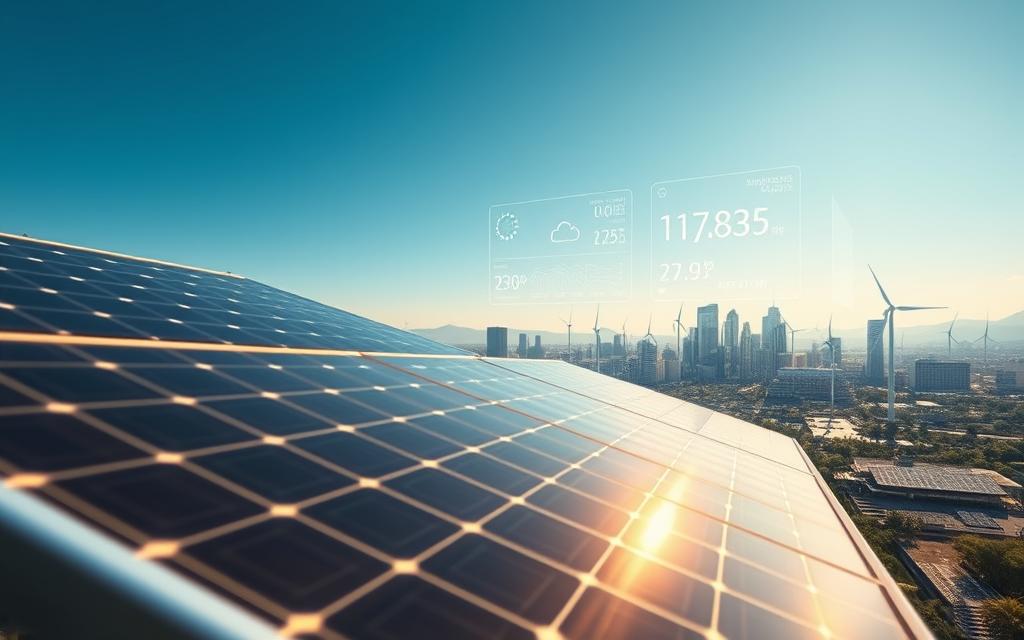
Maxeon wants to lead in solar innovation. They plan to move into new areas like distributed solar products.
This bold plan helps Maxeon meet changing energy needs. Their focus on new tech is key to their future.
Plans for Market Expansion and Sustainability Initiatives
Maxeon aims to grow in new markets, not just in North America. They’re looking at places with a strong solar market and good rules.
They also care about the planet, with plans to help the environment. This shows their commitment to being a responsible company.
Maxeon’s plan is to grow by going to new places and making new products. This should help them keep growing in the changing world of renewable energy.
Conclusion
The Maxeon spin-off summary shows a smart move by SunPower. They split their manufacturing to focus on making solar panels worldwide. This move helped both companies reach their goals better.
Maxeon Solar Technologies has faced tough times but kept growing. They’ve overcome supply chain issues and rules to expand their factories. Their focus on top-notch solar panels makes them stand out in the market.
Maxeon’s role in the shift to green energy is growing. With more people wanting solar power, Maxeon is ready. Their focus on making great panels and working with others shows they’re here to stay.
FAQ
What was the strategic rationale behind SunPower’s decision to spin off Maxeon Solar Technologies?
SunPower spun off Maxeon to tackle global solar competition head-on. Each company now focuses on its main strengths. SunPower aims to grow in North America, while Maxeon works on global manufacturing and tech.
How were assets divided between SunPower and Maxeon during the spin-off?
SunPower kept its Oregon plant and North American market. Maxeon got international factories and over 900 solar patents.
What was the impact of the spin-off on SunPower shareholders?
Shareholders got one Maxeon share for every eight SunPower shares. This move let them see Maxeon’s growth and market performance on NASDAQ.
How did Maxeon perform in the market immediately after its spin-off?
Maxeon started trading on NASDAQ on 27 August 2020. It faced early market ups and downs. Investors were both hopeful and cautious about its future.
What leadership changes occurred at Maxeon following the spin-off?
Jeff Waters became CEO, leading Maxeon from Singapore. This change aimed to guide Maxeon’s global solar strategy and growth.
How did Maxeon utilise the investment from Tianjin Zhonghuan Semiconductor?
The 8 million helped Maxeon grow its production and explore new sites. This investment boosted its manufacturing and met demand for high-efficiency panels.
What are some of the key technological innovations Maxeon has pursued?
Maxeon has pushed solar panel efficiency and durability. It uses over 900 patents and works with SunPower on early research. Its focus is on practical innovation and scaling up.
What major challenges has Maxeon faced as an independent company?
Maxeon faced supply chain issues and material shortages due to COVID-19. It also dealt with tariffs and different rules in markets. These challenges affected costs, timelines, and access.
How does Maxeon’s financial performance compare to its competitors in the solar industry?
Maxeon competes with First Solar, focusing on tech and global reach. It balances growth investments with keeping profits in a competitive market.
What types of strategic partnerships has Maxeon formed to support its growth?
Maxeon teamed up with utilities and project developers in North America and Europe. It also works with universities and SunPower on tech. This supports its growth and innovation.
What is Maxeon’s long-term strategic vision and growth outlook?
Maxeon aims to grow with renewable energy demand, focusing on the US, Europe, and Asia. It plans to expand into new markets, aligning with sustainability trends.
How has the spin-off benefited both SunPower and Maxeon in terms of operational focus?
The split allowed each to focus on its strengths. SunPower targets North America, while Maxeon leads global manufacturing and innovation. This boosts efficiency and strategy for both.
