


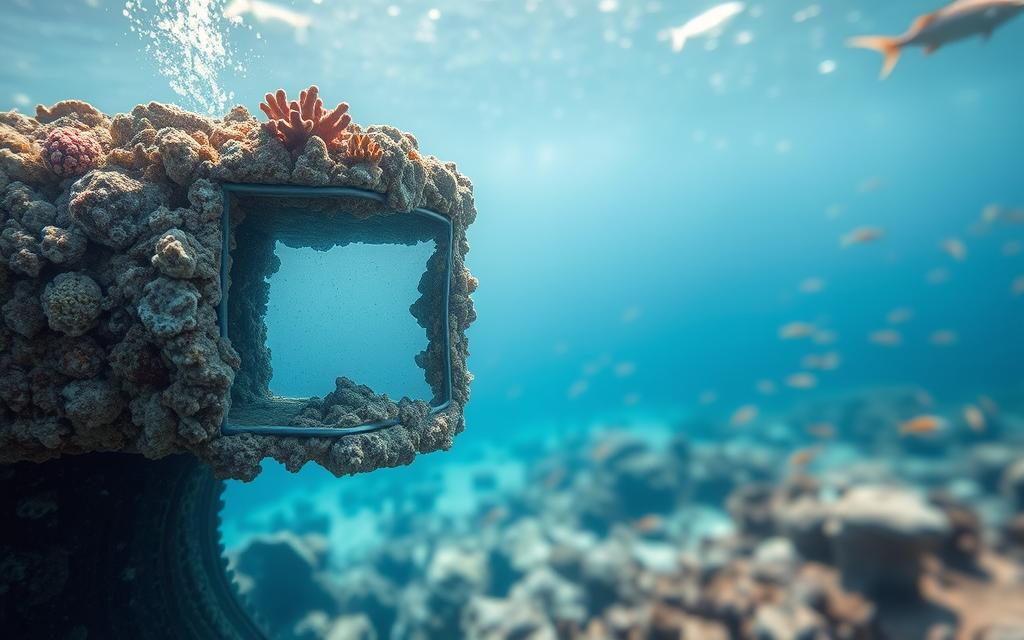
Biorock is a new way to build and fix the sea. It makes natural materials right in the ocean. This happens through a process called mineral accretion.
Professor Wolf Hilbertz started Biorock in 1976. He wanted to make buildings that could grow and get stronger over time.
Biorock buildings can fix themselves. They get stronger as they get older. This makes them perfect for the sea.
Tom Goreau made Biorock work for coral reefs. He started the Global Coral Reef Alliance to save marine life.
This technology is great for protecting coasts and making homes for sea creatures. It’s getting more popular as scientists find new ways to use it.
Understanding Mineral Accretion Fundamentals
Mineral accretion starts with controlled electrolysis in seawater. This method turns dissolved minerals into solid structures with the right electrical currents. It creates a perfect place for marine life to grow and flourish.
Electrochemical Basis of Biorock Technology
Biorock technology uses low voltage seawater electrolysis to speed up mineral deposition. A small electrical current between electrodes makes minerals in seawater solidify on the cathode. This process is good for marine life to grow on.
The process needs little energy but gives big ecological benefits. The electrical current is usually between 1-12 volts. This is safe for marine life and helps minerals build up quickly without harming the environment.
Essential System Components
Good mineral accretion systems have key parts working together. Each part must handle marine conditions well and keep electrical performance steady. Choosing the right parts is key for long-term success.
Related Posts:
- What Is Machining Technology The Process of Shaping…
- What Are Off-Target Effects in CRISPR Technology…

- How Many Technology Companies Are in the World A…

- How Does Cloud Technology Work Storing and Accessing…

- Is Technology in the Classroom Good or Bad Weighing…

- What Is the Forbes Technology Council An Elite…

Electrode Materials and Configurations
What the electrodes are made of affects how well the system works and how long it lasts. Common materials are steel rebar, titanium mesh, and special alloys. These materials conduct well and resist corrosion in saltwater.
There are different ways to set up electrodes based on the project and the site. Simple setups might use one pair of electrodes, while bigger projects might need more. Here’s a table showing some common electrode materials and their features:
| Material Type | Conductivity Rating | Corrosion Resistance | Typical Applications |
|---|---|---|---|
| Steel Rebar | High | Moderate | Small-scale projects, temporary structures |
| Titanium Mesh | Excellent | Exceptional | Permanent installations, high-current systems |
| Copper Alloys | Excellent | Good | Experimental systems, hybrid configurations |
| Stainless Steel | Good | Very Good | Medium-scale projects, cost-effective solutions |
Power Supply Requirements and Options
The power supply for mineral accretion systems needs to give a steady low-voltage direct current. It usually needs 1-3 amps per square metre of cathode. This small energy need means there are many ways to power the system.
Using renewable energy is often the best choice. Solar panels, wind turbines, and tidal generators can all power accretion systems well. They save money and are good for the environment.
Battery backup systems keep the system running when there’s not enough renewable energy. Modern charge controllers keep the voltage right, no matter the weather. This is important for steady mineral growth.
What Is Biorock Technology: Core Concepts Explained
Mineral accretion technology is a clever use of electrochemistry to help the environment. It uses natural processes to build sustainable marine structures and help ecosystems recover. This method combines science with practical solutions to tackle big environmental problems.
Historical Development and Key Innovators
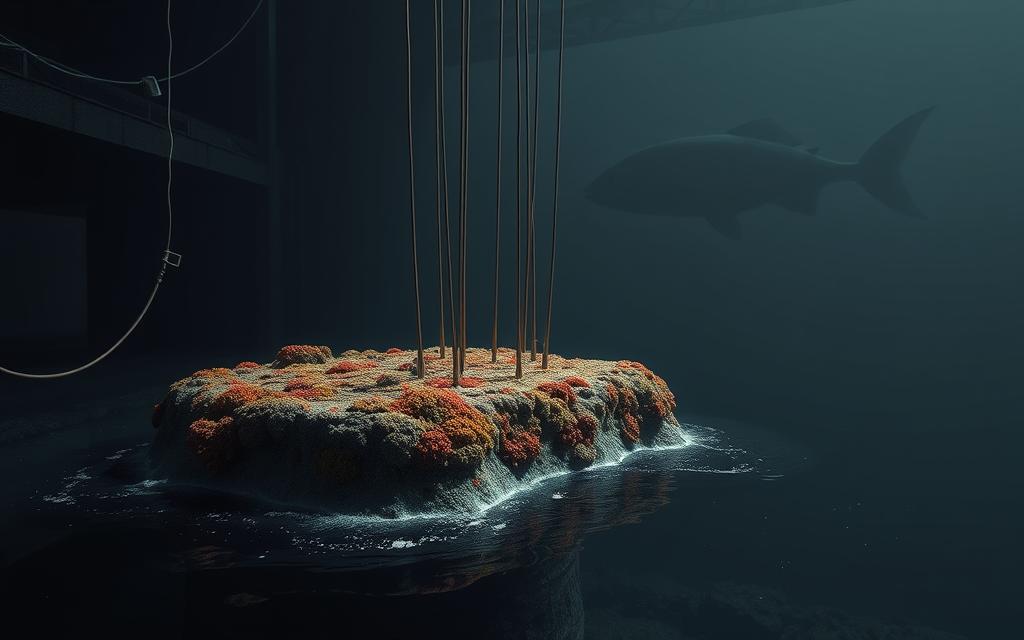
The history of biorock technology starts with Wolf Hilbertz, an architect and marine scientist from 1976. He first thought of using mineral accretion to make marine materials through electrolysis. His work showed how electricity can speed up the creation of limestone in seawater.
In 1987, Tom Goreau, a marine biologist, saw the chance to use Hilbertz’s idea for coral reefs. Together, they made the technology better for the environment. Goreau’s coral knowledge and Hilbertz’s electrochemistry made a strong tool for saving marine life.
These pioneers set the path for biorock technology today. They showed that electricity can not only build but also help corals grow faster and live longer.
Fundamental Scientific Principles
The scientific principles of mineral accretion are based on electrolysis in the sea. A low-voltage current between electrodes in seawater starts reactions. These changes the water chemistry around the structure.
The current makes mineral ions in seawater settle on cathode surfaces. This forms a solid limestone like coral skeletons. The growth happens through several steps:
- Electrolytic migration of calcium and carbonate ions
- pH increase creating alkaline conditions favourable for mineralisation
- Crystallisation of aragonite and calcite minerals
- Continuous structural growth at predictable rates
This environment not only builds structures but also helps marine life settle. The mineral matrix is perfect for coral to attach and grow. It speeds up reef formation that usually takes centuries.
Knowing these basics shows why biorock structures are so successful in marine restoration. It works with nature, not against it, to fix damaged marine ecosystems.
The Science of Mineral Deposition
Biorock technology works wonders thanks to advanced electrochemical processes. These mimic how marine minerals form naturally. They build strong artificial structures that support marine life through chemical reactions in biorock systems.
Electrolytic Processes in Marine Environments
Seawater is perfect for these processes because it’s full of minerals and conducts electricity well. When electricity flows through it, amazing things happen.
The cathode pulls in positive ions and makes the water around it alkaline. This alkalinity causes minerals to settle on the structure’s surface. These electrolytic processes in seawater are perfect for marine life to grow.
Chemical Reactions and Mineral Formation
Many reactions happen at once to build up the structure. Hydrogen gas forms at the cathode, and oxygen at the anode. The rising pH helps create carbonate ions from dissolved carbon dioxide.
Calcium and carbonate ions in seawater combine to form solid calcium carbonate. Magnesium ions also form magnesium hydroxide, adding strength to the structure.
Calcium Carbonate Crystallisation Mechanisms
The calcium carbonate crystallisation process is like how reefs grow naturally. First, amorphous calcium carbonate forms, then it turns into more stable crystals.
Two main types of crystals form:
- Calcite – more stable but grows slower
- Aragonite – grows faster but less stable
What kind of crystal grows depends on the environment. Most marine applications prefer aragonite for its quick growth.
Role of Magnesium Hydroxide and Other Compounds
Magnesium is key in making the structure stronger. The magnesium hydroxide in mineral accretion forms brucite, which mixes with calcium carbonate crystals.
This mix makes a material that’s stronger than pure calcium carbonate. Other minerals like strontium and barium can also join the structure.
| Mineral Compound | Formation Process | Structural Contribution |
|---|---|---|
| Calcium Carbonate | Precipitation from Ca²⁺ and CO₃²⁻ | Primary structural matrix |
| Magnesium Hydroxide | Precipitation from Mg²⁺ at high pH | Enhanced strength and durability |
| Other Trace Minerals | Co-precipitation with main minerals | Improved biological compatibility |
The material that forms is incredibly strong, like natural limestone. This process makes it easy for marine life to settle, making Biorock structures great for restoring habitats.
Coral Reef Restoration Applications
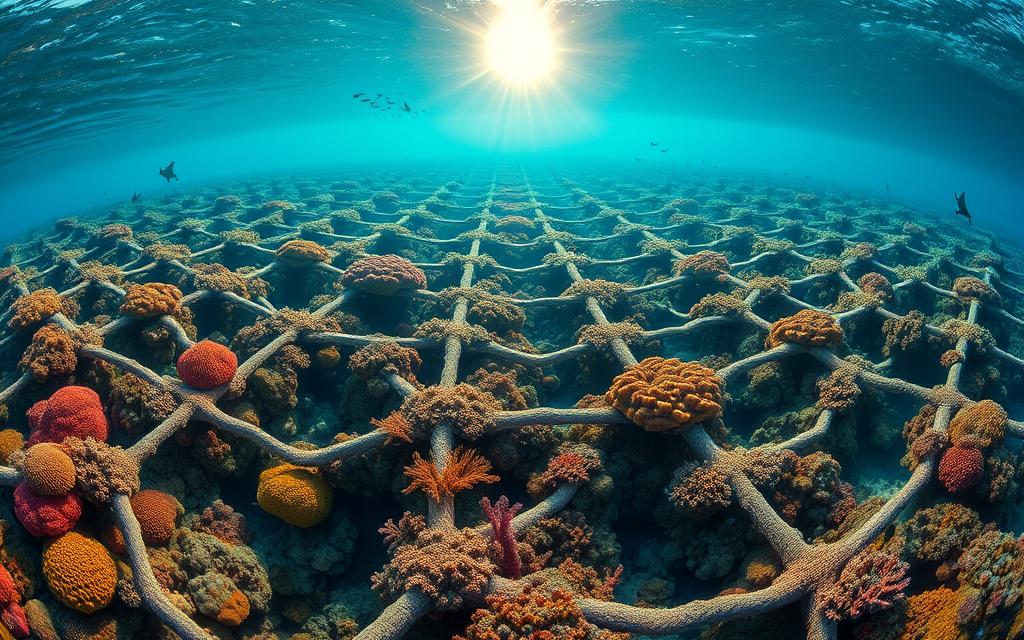
Biorock technology is a new way to protect our oceans. It helps fix damaged coral reefs. This method works by using science to help corals grow back naturally.
Accelerated Coral Growth and Propagation
The Biorock method helps corals grow fast. It adds minerals to corals, making them grow up to ten times faster. This is because the minerals strengthen their skeletons and help them attach better.
Corals on Biorock grow faster in several ways:
- Minerals make their skeletons stronger
- They attach better to the structure
- They can handle stress better
- They are healthier and can reproduce more
When corals get stressed, like during bleaching, Biorock helps them survive. It acts like a nutritional shield for them.
Rehabilitation of Degraded Reef Systems
Biorock is great for fixing reefs that are very damaged. It works well in places where:
- Natural growth is hard
- The ground is not good for corals
- The water quality is bad
- Other fixes didn’t work
The structure supports the corals and helps them grow. This makes it easier for coral communities to come back.
Successful Implementation Case Studies
In Pemuteran, Bali, a project called Karang Lestari used Biorock. It turned a barren seabed into a coral garden.
The project’s results were amazing:
- Recovery in damaged areas
- More marine life
- Healthy coral communities
- More jobs from tourism
This shows how Biorock can fix reefs and help local people.
Species-Specific Adaptation Strategies
Biorock can be adjusted for different coral types. This is based on their growth, mineral needs, and other factors. This way, it can help each coral species in the best way.
Some corals grow faster, while others get stronger. This flexibility lets experts tailor the restoration to fit the needs of each reef.
By choosing the right corals and where to put them, Biorock projects can improve reefs. They do this while keeping the ecosystem balanced.
Broader Marine Habitat Applications
Beyond coral reefs, Biorock technology is versatile in marine habitats. It supports ecological restoration projects, going beyond coral reefs.
Seagrass Meadow Restoration
Seagrass meadows are vital but face damage worldwide. Biorock technology helps with seagrass restoration with biorock. It creates stable surfaces for seagrass roots to grow.
The process makes perfect conditions for seagrass to colonise. These structures fight erosion and protect against strong currents that harm seagrass beds.
Studies show Biorock-enhanced seagrass projects have higher survival rates than old methods. The technology’s permanent structures are great for long-term recovery.
Artificial Reef Construction
Biorock changes artificial reef construction by making living reefs that grow. Unlike old reefs, these ones get stronger over time through mineral buildup.
They support biodiversity by creating complex habitats for marine life. Fish benefit from the shelter and food these reefs offer.
Key benefits include:
- Self-repairing capabilities that maintain structural integrity
- Customisable designs for specific ecological purposes
- Enhanced colonization rates for marine organisms
- Long-term sustainability without material degradation
Coastal Protection Infrastructure
Biorock technology turns coastal protection infrastructure into living systems. Breakwaters and sea walls grow stronger, unlike traditional materials.
These structures protect the coast and support marine life. They also absorb wave energy better than static structures.
Coastal engineers like how Biorock installations adapt to environmental changes. They’re great for areas with rising sea levels or more storms.
This new way of protecting coastlines is a game-changer. It boosts the ecological value of vulnerable coastlines.
Environmental Benefits and Advantages
Biorock technology is a game-changer for our oceans. It not only restores coral reefs but also creates sustainable marine ecosystems. It tackles big environmental challenges facing our oceans and coastlines.
Biodiversity Enhancement Capabilities
Biorock structures attract marine life like magnets. The mineral accretion process creates complex surfaces. Coral larvae quickly colonise these structures, starting new colonies.
Fish and invertebrates find shelter and food in these growing frameworks. This biodiversity enhancement with biorock brings life to underwater areas where none existed before.
The technology supports entire food webs, from tiny organisms to big predators. Biorock installations are key tools for marine conservation.
Carbon Sequestration
Biorock technology helps with carbon sequestration through mineral deposition. The electrolysis process forms calcium carbonate on structures, trapping carbon.
This mineral growth is a natural way to capture carbon. It mimics how oceans absorb atmospheric carbon dioxide.
As structures grow, they store more carbonate material. This long-term carbon storage helps fight climate change.

Coastal Protection Benefits
Biorock installations offer big coastal protection benefits. They reduce wave energy and stabilise shorelines. These structures act as natural breakwaters, protecting coastal areas.
Unlike concrete seawalls, Biorock reefs get stronger over time. The continuous mineral accretion makes them more robust against ocean forces.
Storm Damage Mitigation
Biorock reefs are great at storm damage mitigation. They dissipate wave energy before it hits shorelines. During tropical storms, they reduce wave height and velocity.
This protection lessens property damage and coastal flooding. Communities behind Biorock installations face less storm impact.
The Maldives project showed this clearly. Beaches grew back behind Biorock reefs after installation.
Erosion Control Effectiveness
The erosion control of Biorock technology is a breakthrough. These structures trap sediment and build up beaches naturally.
Unlike hard engineering solutions, Biorock works with nature. It encourages sand accumulation and provides habitat for marine life.
This makes them better than traditional erosion control methods. The technology offers sustainable shoreline protection that improves over time.
Implementation Methodology
Getting Biorock mineral accretion technology right needs careful planning. This planning covers two main areas: checking the site and designing the structure. This way, the project works well with the environment and lasts a long time.
Site Assessment and Selection Criteria
Doing a site assessment for biorock projects is key to success. We must look at the environment to see if the project can work well.
Important things to check include water quality, wave patterns, and current strength. We also look at salinity, temperature, and nutrients. These affect how minerals build up and corals grow.
It’s also important to think about the local wildlife, how stable the ground is, and if there are enough larvae nearby. The site should not get too much sediment and should let water flow well. How much light gets in is also important for plants that need sunlight.
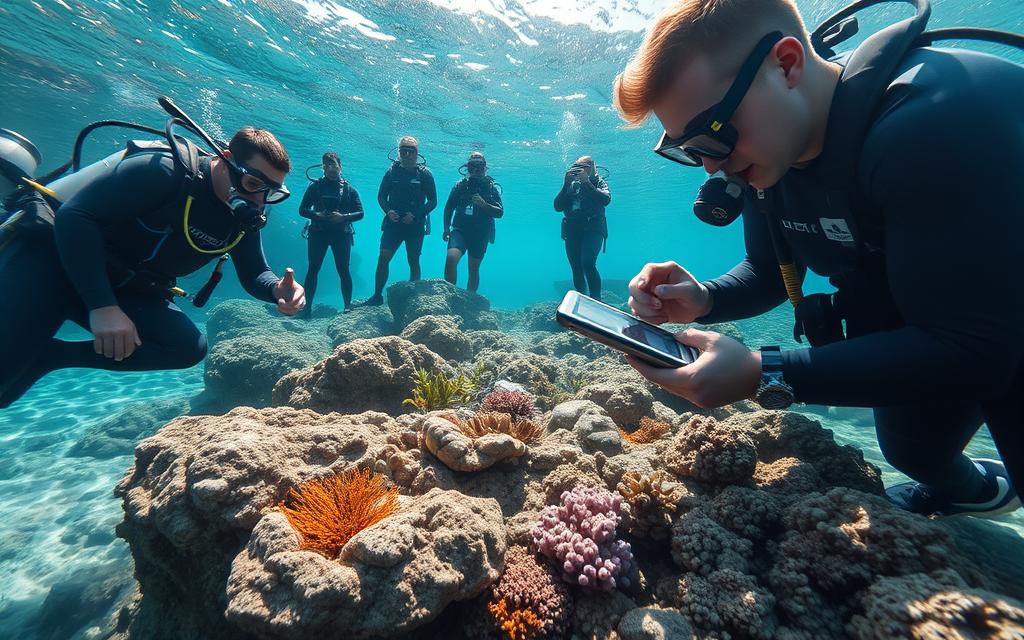
Being able to get to the site for upkeep is also key. It’s important for checking equipment and seeing how things are going. Safety for the team setting it up is a top priority.
Structural Design Considerations
The structural design considerations for Biorock installations are important. They need to work well with the environment and last a long time.
Optimal Size and Shape Configurations
Finding the right size and shape configurations is important. It depends on what the project aims to do and the environment. Smaller ones might be better for growing corals, while bigger ones can help reefs.
Using dome or arch shapes helps the structure stay strong. It also creates different places for marine life to live. These shapes help spread out electricity and keep sediment away in fast-moving water.
Being able to add more parts later is good. Using standard parts makes it easier to set up and saves money. The size should fit the power and maintenance available.
Material Selection and Durability Factors
Choosing the right material for mineral accretion systems is critical. The material should handle the sea well and help minerals build up.
Steel rebar is often used because it conducts electricity well and is strong. There are coatings to stop rust and keep it working. Here’s a table comparing main materials:
| Material Type | Conductivity Rating | Durability Estimate | Cost Factor |
|---|---|---|---|
| Carbon Steel Rebar | Excellent | 15-20 years | Low |
| Stainless Steel | Good | 25-30 years | High |
| Titanium Mesh | Moderate | 30+ years | Very High |
| Copper Alloys | Excellent | 20-25 years | Medium |
It’s also important to think about how to attach corals and if the structure can move with waves. The material should work with local sea life. Choosing the right material means less upkeep and a longer life for the project.
Operational Requirements and Maintenance
For Biorock systems to work well, they need ongoing care and regular upkeep. This ensures they keep growing minerals and supporting marine life.
Power Management and Efficiency
Managing power for Biorock systems is key. They use low-voltage direct current, which is safe for sea creatures and helps minerals build up.
Many systems run on renewable energy like solar panels and wind turbines. This cuts costs and helps the environment. Keeping the voltage right helps minerals grow without wasting energy.
When setting up power, designers must think about the local weather. Places with lots of sun are good, but other areas might need different power sources.
Monitoring and Evaluation Protocols
Checking and reviewing Biorock systems is vital. Technicians check them every month at first, then less often as they settle down.
They look at several things:
- How steady the electrical current is and the voltage
- How fast minerals are growing and if the structure is strong
- How many sea creatures are living there and the variety
- The water’s temperature and quality
Using digital tools helps collect data without needing to visit often. This lets managers keep an eye on things and fix problems fast.
Sustainable Maintenance Practices
Keeping Biorock systems going for a long time means using green maintenance. Checking and replacing anodes is a big part of this.
Teams should follow these green tips:
- Choose eco-friendly parts for replacements
- Do maintenance when it won’t hurt the environment too much
- Get local people to help with upkeep
- Keep records of all maintenance work
Checking how strong the structure is is also important. Technicians need to look for signs of damage or wear.
| Maintenance Activity | Frequency | Key Performance Indicators | Sustainability Considerations |
|---|---|---|---|
| Anode Inspection | Quarterly | Depletion rate, corrosion levels | Recyclable materials, minimal waste |
| Structural Assessment | Bi-annually | Integrity, biofouling extent | Non-invasive techniques, local materials |
| Electrical System Check | Monthly | Voltage stability, energy efficiency | Renewable energy integration, efficient components |
| Biological Monitoring | Seasonally | Species diversity, growth rates | Minimal disturbance, natural development |
Following these steps helps Biorock systems work well and support the sea. With the right care, they become strong and need less help over time.
Challenges and Limitations
Biorock technology has many challenges in technical, environmental, and economic areas. It’s important to understand these to plan successful projects and set realistic goals.
Technical Implementation Barriers
Setting up mineral accretion systems is hard due to several technical issues. One big problem is getting reliable power, which is hard in remote areas.
Systems also need to last long in harsh sea conditions. They must resist:
- Constant saltwater exposure
- Strong currents and wave action
- Biofouling from marine organisms
- Potential damage from fishing activities or boats
Getting to these systems for maintenance is another challenge. Underwater systems need special diving skills for checks and repairs. This makes finding solutions to keep them working long-term very important.
Environmental Considerations
When starting Biorock projects, we must think about the environment. These structures can affect local marine life if not planned well.
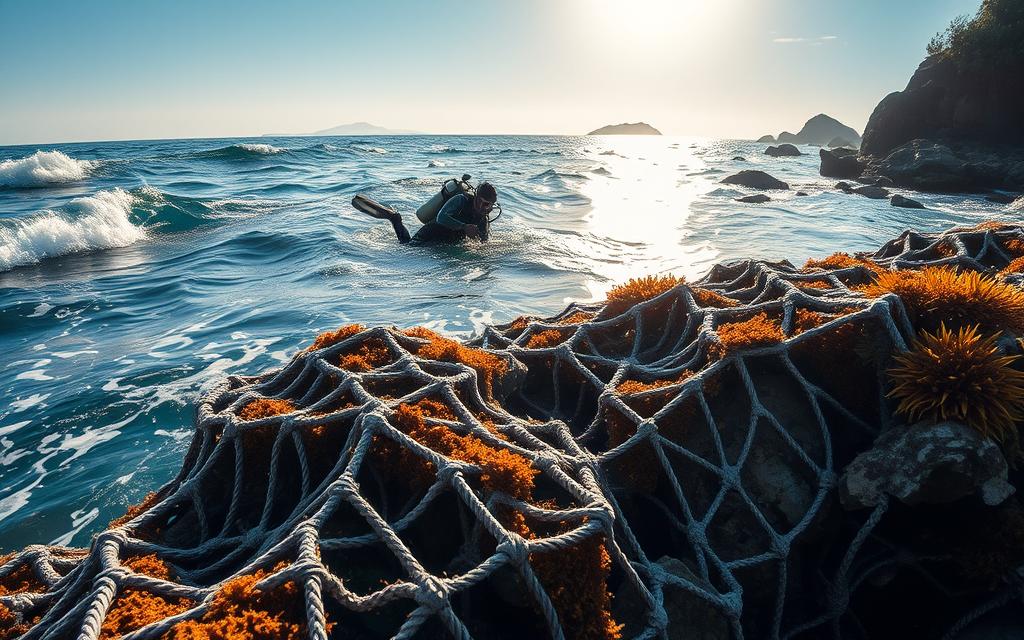
Choosing the right place helps avoid harming the environment. But, we must watch for:
- Potential alteration of natural water flow patterns
- Introduction of non-native species attachment points
- Changes in sediment deposition around structures
- Possible electromagnetic effects on marine life
Doing thorough studies and monitoring is key. This ensures Biorock helps the environment, not harms it.
Economic Constraints
Money is a big issue for using Biorock. It costs a lot to start, including materials, setup, and power. This makes it hard for many to use it.
Keeping the system running also costs money. This includes:
- Regular maintenance and monitoring expenses
- Energy consumption for electrolysis processes
- Specialised personnel requirements for installation and upkeep
- Replacement costs for damaged components
This makes finding money a big problem. Often, projects need help from grants or donors. Finding ways to make it cheaper is key for more use.
Despite these issues, research and experience are helping. They aim to make Biorock technology more affordable and sustainable for everyone.
Economic Analysis and Viability
Looking at the cost of marine restoration is key. It helps us see how Biorock tech stacks up against old methods. A detailed look at the finances shows Biorock’s real value.
Initial Capital Investment Requirements
Starting a Biorock project needs a big upfront cost. This cost includes:
- Structural materials and framework construction
- Electrode installation and electrical systems
- Power supply infrastructure
- Professional installation services
- Permitting and regulatory compliance costs
The cost can change a lot based on the project’s size and where it is. Projects in rich countries cost more than those in poorer ones.
Operational Cost Structures
After it’s set up, Biorock systems have ongoing costs. The main costs are:
- Electrical power for the electrolysis
- Regular maintenance and checks
- Replacing parts and fixing things
- Staff for upkeep and watching the system
The biggest cost is power. But, using solar or wave energy can cut down on this cost a lot.
“The long-term costs of Biorock tech get better when you use solar or wave energy.”
Economic Return Assessment
Looking at the money side of Biorock shows it’s worth it. The benefits come in many ways:
- Tourism enhancement – Healthy reefs bring in divers and snorkellers
- Fisheries improvement – Good habitats mean more fish for fishing
- Coastal protection – Less erosion means less money for repairs
- Research and education – It’s a chance for science and learning
Projects like this pay off over time. They often start making money back in 3-5 years, which is great for places that rely on the sea.
Biorock is cheaper than old methods over time. It helps marine life grow faster and live longer. This means better use of resources and better results in the long run.
Global Implementation Success Stories
Biorock technology has shown great success worldwide. It has helped restore marine ecosystems in the Caribbean, Southeast Asia, and Pacific Islands. This technology has brought measurable benefits to these areas.
Caribbean Restoration Projects
The Caribbean is a success story for Caribbean biorock projects. Places like Grenada and the Turks and Caicos Islands have seen great results. These projects help areas hit by hurricanes, bleaching, or coastal damage.
In Jamaica, coral grew 3-5 times faster than usual. The structures also attracted marine life quickly. Local fishermen saw more fish around these reefs, showing the technology’s wide benefits.
Southeast Asian Initiatives
Indonesia and its neighbours have led in Southeast Asian initiatives with Biorock. Their rich reefs and biodiversity make them perfect for testing. Bali, Lombok, and Sulawesi are now models for marine conservation.
“The transformation we’ve seen in degraded areas through Biorock technology is amazing. It’s a real solution for reef recovery in key biodiversity spots.”
These projects mix science with community involvement. They’re effective against dynamite fishing and coral mining, where natural recovery takes decades.
Pacific Island Applications
Pacific Island nations are vulnerable to reef damage. Pacific Island applications of Biorock technology are critical. Projects in Fiji, Palau, and French Polynesia help reefs and protect coastlines.
These projects blend traditional knowledge with modern conservation. The structures stand strong during cyclones, protecting coastlines and ecosystems.
Measurable Success Metrics and Outcomes
Success of these projects is shown through success metrics for reef restoration. They use standardised monitoring to check ecological recovery and project success.
| Region | Coral Growth Rate | Survival Percentage | Biodiversity Increase | Time Frame |
|---|---|---|---|---|
| Caribbean | 2-4 cm/year | 85-92% | 45% more species | 24 months |
| Southeast Asia | 3-6 cm/year | 78-88% | 62% more species | 36 months |
| Pacific Islands | 2-5 cm/year | 82-90% | 51% more species | 30 months |
The data shows coral growth and resilience improvement. Monitoring shows more life around Biorock structures over time.
Other signs of success include more fish, better water quality, and community involvement. The technology is great for creating living breakwaters that grow stronger over time.
Future Research and Development Directions
Biorock technology is evolving fast, opening up new chances for marine restoration. Research is focused on making it more efficient, scaling up projects, and combining it with other eco-friendly methods.
Technological Innovation Opportunities
Scientists are looking into many ways to boost Biorock systems. They’re exploring new materials for better electrodes and structures.
Smart monitoring systems are also being developed. These could give us live updates on how fast minerals are building up and the environment’s conditions.
Integrating renewable energy is a key goal. Using solar and wave power could make Biorock projects greener and cheaper.
Scalability Challenges and Solutions
Expanding Biorock projects is tough. It needs advanced engineering and lots of resources for bigger setups.
Researchers are working on modular designs. These allow projects to grow bit by bit, depending on funding and success.
They’re also setting up standard ways to do things. This makes it easier to use Biorock on a larger scale in different places.
Integration with Complementary Restoration Methods
Biorock tech is great when paired with other marine restoration methods. Coral gardening, for example, gets a boost from growing on Biorock structures.
Scientists are mixing Biorock with larval propagation. This mix increases genetic variety and provides the best conditions for growth.
Biorock is being used in coastal protection too. It’s part of bigger plans to fight erosion and protect the coast.
The future of marine restoration is about comprehensive ecosystem approaches. Biorock technology is evolving to fit into this broader vision.
Conclusion
Biorock technology is changing how we restore marine habitats. It uses mineral accretion to help coral reefs and other marine areas. This method has shown great success in making these ecosystems healthier.
The benefits of Biorock technology are clear. It helps coral grow faster, increases biodiversity, and protects coastlines. Projects around the world have shown it works well in practice.
For the future of marine restoration, Biorock technology is key. It offers big solutions for damaged marine areas. It also helps in reducing carbon emissions, making it even more valuable.
This summary shows Biorock technology is ready for more use. More research will help overcome current challenges. It will also open up new ways to use this technology.
Organisations focused on marine conservation and coastal communities should think about using Biorock. Investing in this technology can help restore ecosystems and support local economies. It’s a step towards a healthier and more resilient coastline.
FAQ
What is Biorock technology and who developed it?
Biorock technology, also known as mineral accretion technology, is a way to restore marine habitats. It uses low-voltage electrical currents to grow minerals on structures underwater. Wolf Hilbertz invented it in 1976, and Tom Goreau adapted it for coral reefs, starting the Global Coral Reef Alliance.
How does the mineral accretion process work scientifically?
It works through electrolysis in seawater. A small electrical current flows between an anode and a cathode, usually made of steel rebar. This creates alkaline conditions around the cathode, causing minerals in the water to crystallise and grow.
What are the key components of a Biorock system?
Key parts include electrodes (anode and cathode), a power supply, and a framework. The cathode is often steel rebar. The system runs at low voltages for safety and efficiency.
Can Biorock technology be used for purposes other than coral reef restoration?
Yes, it’s used for many things like restoring seagrass meadows and building artificial reefs. It’s also used for coastal protection, like self-repairing breakwaters. It can improve many marine habitats and fight erosion.
What environmental benefits does Biorock technology offer?
It boosts biodiversity by attracting marine life and sequesters carbon through mineral deposition. It also protects coastlines by reducing storm damage and erosion. Projects like those in the Maldives show it can restore beaches and support ecosystem health.
How is a Biorock project implemented from start to finish?
It starts with a site assessment to check environmental conditions and ecological needs. Then comes design, material selection, installation, and connecting to power. Ongoing monitoring and maintenance are key for long-term success.
What are the operational and maintenance requirements for Biorock structures?
They need a steady low-voltage power supply and regular checks on growth and marine life. Sustainable maintenance practices are essential. Using renewable power helps keep the system running well.
What challenges might one face when implementing Biorock technology?
Challenges include technical issues like durable materials and stable power in the sea. There’s also the risk of ecological disruption and economic costs. But, careful planning and innovation can overcome these.
Is Biorock technology economically viable in the long term?
There’s an initial cost, but it can be cost-effective over time. Benefits like better fisheries, tourism, and reduced erosion costs can outweigh costs. It’s often a good investment when it meets community and environmental goals.
Are there documented success stories of Biorock technology in use?
Yes, there are many success stories. For example, the Karang Lestari project in Bali restored coral reefs. Projects in the Caribbean, Southeast Asia, and Pacific Islands have also shown great results, with fast coral growth and high survival rates.
What future developments are expected for Biorock technology?
Future plans include making it more efficient and scalable. It will be integrated with other restoration methods and research will address current limitations. The goal is to make it more accessible for global marine conservation.
How does Biorock technology contribute to carbon sequestration?
It deposits minerals like calcium carbonate, which sequesters carbon dioxide from seawater. This helps fight climate change by mimicking natural reef formation and increasing the ocean’s carbon sink role.
What types of corals and marine species benefit most from Biorock structures?
Many coral species grow faster and stronger on Biorock structures, even in damaged areas. These structures also attract a wide variety of marine life, including fish and plants, supporting ecosystem recovery.
