


Nike’s Dri-FIT fabric is a big step forward in athletic performance apparel. It changes how athletes feel during exercise.
This special fabric doesn’t soak up sweat like cotton does. It uses moisture-wicking technology to move sweat away from your skin. This sweat then evaporates fast.
This smart way of handling sweat management keeps athletes dry and comfy. It’s a new way of thinking about sportswear.
Dri-FIT helps keep your body at the right temperature. It makes athletes more focused on their game. This tech is key in today’s sportswear.
The Fundamentals of Dri-FIT Technology
Nike’s Dri-FIT has changed athletic wear for the better. It makes sweating a benefit, not a problem.
Defining Nike’s Innovative Fabric System
Dri-FIT uses polyester fabric technology with special microfibres. These fibres push moisture away, unlike regular fabrics.
The tech has two layers. The inner one pulls sweat from your skin. The outer layer helps it dry fast. This is real fabric innovation in sportswear.
Core Principles of Moisture Management
Dri-FIT works by moving moisture through tiny channels. It doesn’t need chemicals that can fade.
Related Posts:
- How Many Technology Companies Are in the World A…

- What Is the Forbes Technology Council An Elite…

- How Does Cloud Technology Work Storing and Accessing…

- Is Technology in the Classroom Good or Bad Weighing…

- Does Georgia Institute of Technology Require the SAT…

- What Are Off-Target Effects in CRISPR Technology…

This tech keeps you dry and comfortable. It stops the soggy feeling of old athletic wear. It’s perfect for the gym or outside.
Unlike cotton, Dri-FIT dries quickly and stays strong. It’s light, so you can move freely without losing quality.
How Dri-FIT Technology Works: The Science Behind the Fabric
Dri-FIT technology is a game-changer in athletic wear. It uses advanced science to manage moisture better than regular fabrics. This is thanks to its unique physical and chemical properties.
The Capillary Action Mechanism
Dri-FIT uses capillary action science to keep you dry. It’s like how plants absorb water through their roots. This process moves sweat away from your skin.
The fabric has tiny channels that pull sweat to the outside. There, it spreads out and dries faster. This keeps you cool and dry, even when you’re working hard.
Polyester Fibre Structure and Function
The polyester fibre benefits are key to Dri-FIT’s success. Polyester is better at managing moisture than natural fibres. It works well in all conditions.
Micro-denier Construction
Nike uses micro-denier technology to make super-fine fibres. These thin strands increase the fabric’s surface area. This means more room for sweat to evaporate.
These tiny channels help move sweat quickly. This leads to faster drying and better comfort while exercising.
Hydrophobic Properties
Dri-FIT fabrics have special hydrophobic fabric properties. Nike makes polyester even better at repelling water. This creates a smart barrier for moisture.
This barrier lets sweat pass through but keeps rain out. The fabric stays light and breathable, even when you’re sweating a lot. This is perfect for all kinds of sports.
Together, these scientific features make Dri-FIT a top choice for athletes. They keep you dry, comfortable, and focused on your game.
Key Benefits of Dri-FIT Fabric for Athletes
Nike’s Dri-FIT technology offers big advantages for athletes. It makes workouts better than usual sportswear. This means athletes can perform better and have better training sessions.
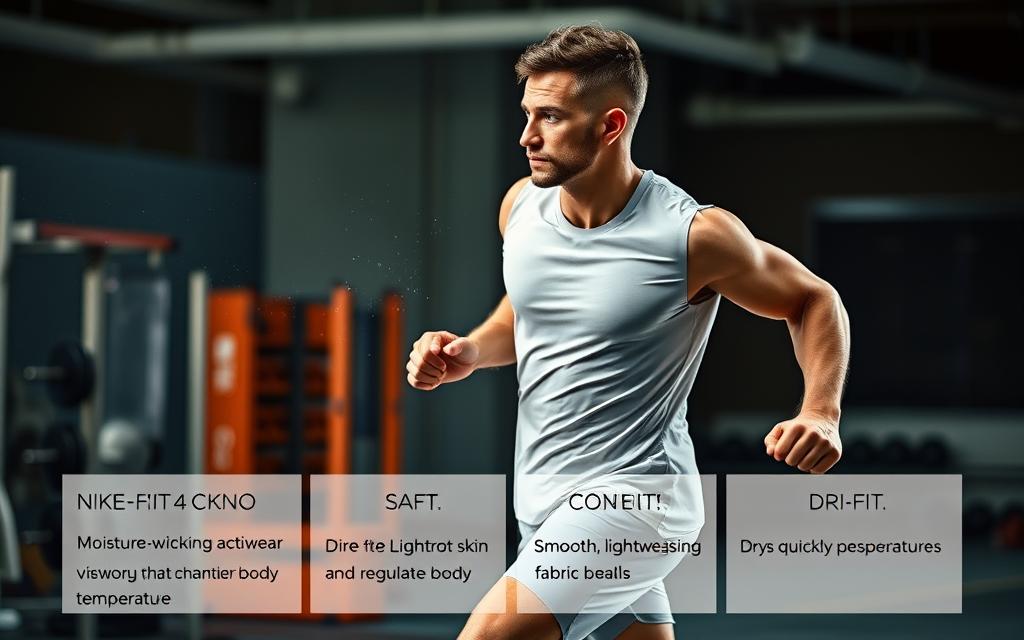
Enhanced Comfort During Physical Activity
Dri-FIT fabric changes how we feel during exercise. It keeps you dry by moving sweat away from your skin. This is different from regular clothes that get wet.
So, athletes stay dry even when they’re really working hard. This stops clothes from feeling heavy and clingy. It helps athletes stay focused and perform better.
Temperature Regulation Advantages
Dri-FIT keeps your body at the right temperature during exercise. It moves sweat away from you, helping it cool down naturally.
This stops you from getting too hot during hard activities. It also keeps you warm when it’s cooler. This helps athletes stay at their best all the time.
Reduced Chafing and Irritation
Dri-FIT reduces skin irritation because it’s designed to be smooth. The fabric moves sweat away, so it doesn’t rub against your skin.
Athletes can move easily without feeling uncomfortable. This means they can train longer and recover faster. It’s a big win for athletes.
| Benefit Category | Mechanism | Performance Impact |
|---|---|---|
| Moisture Management | Capillary action moves sweat to surface | Maintains dry feel during activity |
| Thermoregulation | Evaporative cooling mechanism | Prevents overheating during exertion |
| Comfort Enhancement | Reduced skin contact with moisture | Minimises distractions and irritation |
| Durability Factor | Quick-drying polyester construction | Maintains integrity through multiple wears |
Dri-FIT’s features work together to help athletes. It keeps them comfortable and focused. This lets athletes reach their goals without distractions.
The Evolution of Dri-FIT Technology
Nike’s moisture-wicking innovation has taken us on a journey through sportswear history. It’s a story of constant improvement and patent-protected breakthroughs. This shows how athletic wear has evolved to meet athletes’ needs.
Nike’s Initial Development and Patents
In the late 1980s, Nike’s team saw a big need for moisture management in sportswear. Their work led to many Nike fabric patents for a unique polyester blend and construction.
These patents set the stage for Nike’s exclusive technology. They allowed Nike to lead while others tried to catch up.
Technological Advancements Over Time
In the 1990s and 2000s, Nike poured a lot of money into research. They made their fabric better with faster wicking and durability.
Later, they added antimicrobial treatments to stop odour. They also made production more sustainable, using less water while keeping performance high.
From Basic to Advanced Dri-FIT Variants
The Dri-FIT evolution brought special variants for different sports and weather. Dri-FIT UV added sun protection, and Dri-FIT Thermal kept you warm in cold weather.
Nike turned a simple moisture-wicking idea into a wide range of performance fabric history. Today, you can find fabrics with targeted compression, better breathability, and even tech integration.
Each new step built on what came before. Now, Nike has a range of fabrics that keep you dry while meeting specific needs in sports and weather.
Dri-FIT Versus Traditional Cotton Athletic Wear
Choosing workout clothes means picking between modern fabrics and traditional cotton. This athletic wear comparison shows big differences in how these materials perform and last.
Performance Comparison in Different Conditions
Cotton absorbs moisture, which is bad for athletes during hard workouts. Unlike Dri-FIT technology, cotton doesn’t move moisture away from your skin. This makes cotton clothes heavy and clingy.
In hot weather, cotton is even worse. It holds sweat, stopping your body from cooling down. Dri-FIT keeps you dry, helping your body stay cool.
In cold weather, cotton gets wet and makes you lose heat fast. Dri-FIT keeps a dry layer next to your skin, keeping you warm.
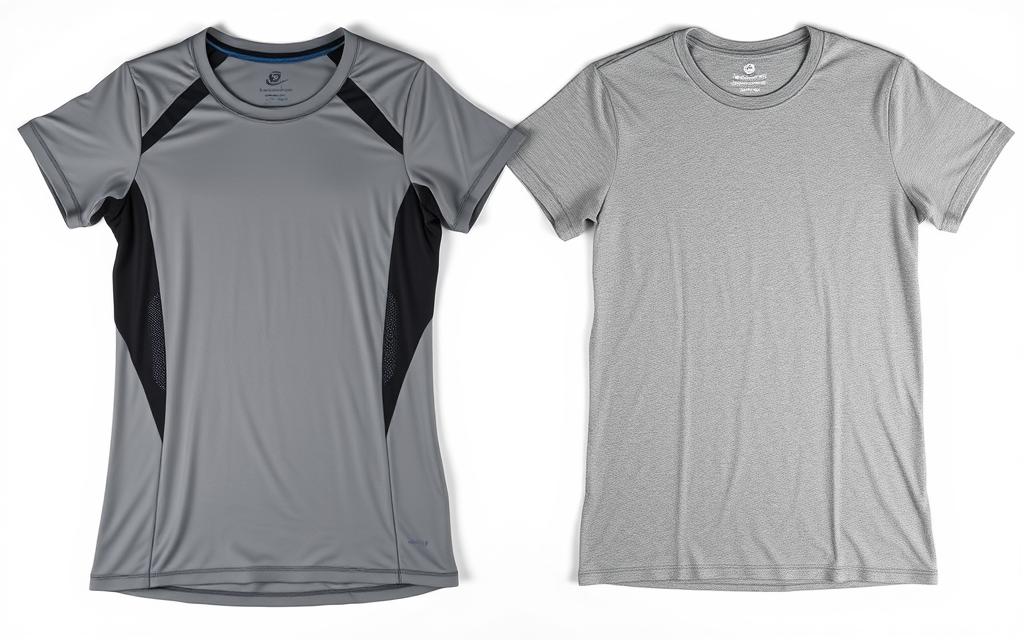
In humid places, cotton gets even heavier and more uncomfortable. Dri-FIT stays light and comfy, even in damp air.
Long-term Durability and Maintenance
Performance fabrics last longer than cotton. Dri-FIT clothes keep their shape and fit well even after many washes. Cotton stretches, shrinks, and loses its shape over time.
Colour staying power is another win for technical fabrics. Dri-FIT’s synthetic fibres keep colours bright, unlike cotton which fades quickly.
Odour resistance is also a big difference. Dri-FIT stops bacteria that cause bad smells. Cotton lets bacteria grow, making clothes smell worse and needing more washing.
Looking after Dri-FIT clothes is different but they last longer than cotton. Taking care of them means they stay good for longer.
The Dri-FIT vs cotton debate is about performance vs tradition. For serious athletes, the benefits of moisture-wicking fabrics are clear. They offer better comfort, performance, and value over time.
Different Types of Dri-FIT Fabrics
Nike’s Dri-FIT technology has grown to meet various athletic needs. These Dri-FIT variations are designed for specific sports and weather conditions.
Standard Dri-FIT Construction
The core of Dri-FIT fabrics is hydrophobic polyester fibres. These fibres manage moisture by pulling sweat away from the skin. The standard design has a double-layer with different knit densities.
This setup ensures sweat evaporates quickly and performance stays consistent. It’s the foundation for all the special versions.
Dri-FIT Knit and Woven Variations
The knit vs woven performance fabric debate focuses on athletic needs. Knit Dri-FIT is great for activities needing stretch and flexibility. Woven fabrics are more durable and structured.
- Knit fabrics are best for running and yoga
- Woven versions are better for training shorts and jackets
- Both keep moisture-wicking properties
Specialised Dri-FIT Technologies
Nike has created advanced fabrics for specific challenges. These technologies add extra features while keeping the core moisture-wicking function.
Dri-FIT UV Protection Variants
For athletes outdoors, UV protection athletic wear is key. These versions have ultraviolet protection factor (UPF) technology. The protection works even when wet.
They’re ideal for golf, tennis, and long-distance running in the sun. The UV protection doesn’t affect breathability or moisture-wicking.
Dri-FIT with Infrared Technology
The infrared technology apparel is Nike’s latest innovation. It uses ceramic particles in the fibres to reflect body heat back to the muscles.
This helps keep muscles at the right temperature during exercise. It’s great for athletes training in cool or warm-up phases.
These special Dri-FIT options show Nike’s dedication to meeting different athletic needs through fabric innovation.
Nike Product Lines Utilising Dri-FIT Technology
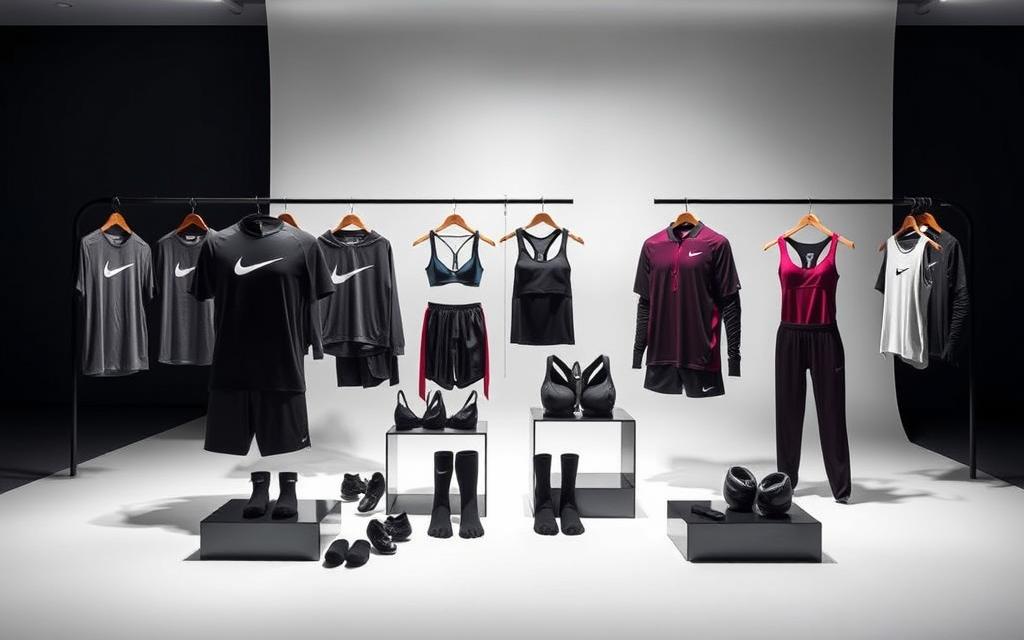
Nike’s innovative fabric, Dri-FIT, is key to their performance gear in many sports. It’s adaptable for different sports, keeping athletes dry and comfortable. This technology is a big part of Nike’s success.
Dri-FIT in Nike Running Apparel
Nike’s running gear uses Dri-FIT to keep runners dry. The Nike running gear has special vents and is light. This helps cool the body down.
Items like the Nike Dri-FIT ADV Run Division tops and Aeroswift collection are popular. They have:
- Mesh panels for breathability
- Minimal seams for comfort
- Stretch for easy movement
Basketball and Training Collections
Nike’s basketball performance wear uses Dri-FIT to handle sweat during games. It dries fast, keeping athletes cool. This is important for quick changes in game pace.
The Nike NBA Connected Jersey shows how Dri-FIT meets tech needs. Nike Pro for training also uses Dri-FIT for various workouts.
“The moisture management properties allow athletes to maintain focus on performance, not discomfort during critical moments.”
Golf and Tennis Specific Applications
Nike’s golf apparel technology uses Dri-FIT in polos and jackets. It looks good and keeps dry during swings and walks. This meets golf’s needs for both looks and performance.
For tennis, tennis-specific clothing uses Dri-FIT to meet tennis’s special needs. It offers:
| Feature | Golf Application | Tennis Application |
|---|---|---|
| UV Protection | Standard in all golf polos | Integrated in tennis tops |
| Stretch Properties | Moderate for swing freedom | Maximum for court coverage |
| Style Integration | Collared designs | Athletic silhouettes |
Both golf and tennis lines show Dri-FIT’s adaptability. It keeps athletes dry and comfortable in different sports. This technology drives innovation in Nike’s performance wear.
Proper Care and Maintenance of Dri-FIT Garments
Your Dri-FIT clothes are a big investment in tech. Taking care of them means they keep working well for many workouts and races. Knowing how to look after technical fabrics helps them last longer and stay effective.
Washing and Drying Best Practices
Here are some laundry best practices for your Dri-FIT clothes:
- Wash them inside out to protect the tech surface
- Use cold water (30°C max) to avoid fibre damage
- Choose mild detergents without fabric softeners or bleach
- Avoid washing with heavy fabrics like denim that can cause abrasion
For drying, air drying is the safest choice. If you must use a machine, pick the lowest heat setting and take them out quickly. High heat can damage polyester fibres and reduce moisture-wicking.
Preserving Moisture-Wicking Properties
Maintaining moisture-wicking needs careful attention to detergent and washing frequency. Body oils, sweat, and detergent chemicals can block the fabric’s tiny pores.
Here are some special tips for preserving technical fabrics:
- Use sport detergents made for synthetic fabrics
- Wash after each wear to stop oil build-up
- Use a vinegar rinse (60ml white vinegar in rinse cycle) to clean out residues
- Store clothes flat or hanging to keep fibres in shape
Common Maintenance Mistakes to Avoid
Many athletes unknowingly harm their sports wear with wrong care. Stay away from these common mistakes in your athletic wear care routine:
| Mistake | Consequence | Correct Approach |
|---|---|---|
| Using fabric softeners | Coats fibres, reducing moisture transport | Use detergent only |
| High-temperature washing | Damages polyester fibres | Cold wash cycle |
| Tumble drying on high heat | Melts microfibres, reduces elasticity | Air dry or low heat |
| Storage while damp | Promotes mildew and odour retention | Complete drying before storage |
Proper care keeps your Dri-FIT clothes working well for a long time. By following these tips, you protect your investment and ensure top performance in sports.
Environmental Considerations and Sustainability
Nike is dedicated to protecting the environment through their Dri-FIT technology. They meet the growing need for sustainable sportswear. They aim to reduce their ecological footprint while keeping their products top-notch for athletes.
Nike’s Approach to Recycled Polyester
Nike has made big steps in using recycled materials in Dri-FIT products. They use recycled polyester from plastic bottles. This turns waste into fabric that performs well.
They clean, shred, and melt plastic bottles into pellets. These pellets are spun into yarn. This yarn has the same moisture-wicking properties as new polyester but uses less petroleum and keeps plastic out of landfills.
Lifecycle Assessment of Dri-FIT Products
Nike looks at the whole life of their Dri-FIT clothes to see their environmental impact. They check water use, energy, and carbon emissions from start to finish.
They found that recycled polyester cuts carbon emissions by up to 30%. This makes Dri-FIT more appealing for those who want eco-friendly sports clothes.
| Production Phase | Environmental Impact | Nike’s Mitigation Strategy |
|---|---|---|
| Material Sourcing | High water and energy use | Recycled polyester implementation |
| Manufacturing | Chemical usage and emissions | Waterless dyeing technologies |
| Product Use | Washing energy consumption | Quick-dry properties reduce washing frequency |
| End of Life | Landfill accumulation | Recycling programs and circular design |
Future Sustainable Initiatives
Nike is always looking to improve with big sustainability goals for Dri-FIT. They want to use 100% renewable energy and increase recycled content in their products.
They plan to create recycling systems where old clothes become new ones. They also research bio-based materials for even better sustainable fabrics. This keeps Dri-FIT’s performance high while being eco-friendly.
Nike’s commitment to sustainability is clear. They keep pushing the sportswear industry to do better. Their efforts set new standards for the future.
What is Dri-FIT Technology: Consumer Perspectives
Dri-FIT’s success is not just about its tech specs. It’s about how athletes and everyday people feel about it. Their stories show why Dri-FIT stays popular across different generations.
User Experiences and Testimonials
Fitness fans love Dri-FIT for its amazing feel. They say it makes their workouts better. Wearing it boosts their confidence, too.
People say Dri-FIT is super comfy during long workouts. Runners love how it keeps them dry during long runs. It feels lighter and more comfortable as sweat dries off.
“The difference in comfort during my marathon training was night and day. No more heavy, soaked cotton shirts weighing me down.”
Professional Athlete Endorsements
Top athletes back Dri-FIT, saying it really works. Tennis players say it keeps them cool in hot matches. Basketball players like how it prevents chafing.
Many pros have used Dri-FIT for years. Their support shows it’s reliable and effective. Their stories help build trust with consumers.
Market Reception and Brand Loyalty
When Dri-FIT came out, people loved it. It created a new kind of athletic wear. Nike’s brand loyalty grew because of it.
Studies show Dri-FIT is seen as top-notch athletic wear. It has a loyal following. People keep coming back because of its performance and comfort.
| Aspect | Consumer Rating | Professional Feedback | Impact on Loyalty |
|---|---|---|---|
| Comfort During Activity | 4.8/5 | Exceptional | High |
| Moisture Management | 4.9/5 | Industry Leading | Very High |
| Durability | 4.7/5 | Reliable | Medium-High |
| Overall Satisfaction | 4.8/5 | Consistently Positive | High |
Dri-FIT’s lasting popularity shows it meets real needs. It’s loved by all, from weekend runners to Olympic athletes. It keeps setting the bar high in athletic wear.
Conclusion
Nike Dri-FIT technology is a big step forward in sports clothes. It’s designed to manage moisture and improve performance. This means athletes stay dry and comfy, even when they’re pushing hard.
The tech behind Dri-FIT uses special polyester fibres. These fibres pull sweat away from your skin. This helps keep you cool and stops irritation.
Dri-FIT beats out old materials like cotton in many ways. It’s more durable and easier to look after. Nike keeps making it better for different sports.
Knowing how Dri-FIT works helps you pick the best clothes. Taking good care of them makes them last longer. Nike also uses eco-friendly materials in their designs.
This summary shows how Dri-FIT is key in today’s sports clothes. It’s a top pick for both pros and casual users. We can expect even more improvements in fabric tech in the future.
FAQ
What is Nike Dri-FIT technology?
Nike Dri-FIT is a special fabric that pulls sweat away from your skin. It makes sure you stay dry and comfortable while exercising. This is because it moves moisture better than regular fabrics.
How does Dri-FIT technology work?
Dri-FIT uses capillary action to pull sweat away. It has special polyester fibres that do this. The fabric’s design helps move moisture fast, keeping you dry.
What are the main benefits of wearing Dri-FIT clothing?
Wearing Dri-FIT makes you more comfortable and keeps you cool. It also reduces irritation. This helps you perform better and stay focused during exercise.
How does Dri-FIT compare to cotton for athletic wear?
Dri-FIT is better than cotton for sports because it wicks away sweat. It’s also more durable and works well in different weather conditions.
Are there different types of Dri-FIT fabrics?
Yes, Nike has many Dri-FIT fabrics. There are standard ones and special ones with extra features like UV protection. Each type is made for different sports.
In which Nike product lines is Dri-FIT technology used?
Dri-FIT is in many Nike products. This includes running clothes, basketball gear, and sport-specific items for golf and tennis. It’s great for staying dry and comfortable during sports.
How should I care for my Dri-FIT garments?
To keep Dri-FIT working well, wash it in cold water with mild detergent. Don’t use fabric softeners and dry it on low heat or air dry. This helps it last longer and stay effective.
Is Dri-FIT technology environmentally friendly?
Yes, Nike uses recycled polyester in many Dri-FIT products. They also work to make their fabrics more eco-friendly. This includes using less water and reducing waste.
What do athletes and consumers say about Dri-FIT?
Athletes love Dri-FIT for its comfort and performance. They say it keeps them dry and focused. This makes people loyal to the brand and happy with their purchases.
Has Dri-FIT technology evolved over time?
Yes, Dri-FIT has improved a lot over the years. Nike has made new versions and better fibres. This keeps Dri-FIT at the top in sportswear.
Can Dri-FIT be used for all types of sports and activities?
Absolutely. Dri-FIT is good for many sports and activities. It’s great for intense sports like running and basketball, and also for less intense activities like golf or gym workouts.
Does Dri-FIT help with temperature regulation in cold weather?
Yes, Dri-FIT helps keep you warm in cold weather. It moves sweat away from your skin, so you don’t get cold. This makes it perfect for outdoor activities in cooler climates.
